Aenigma

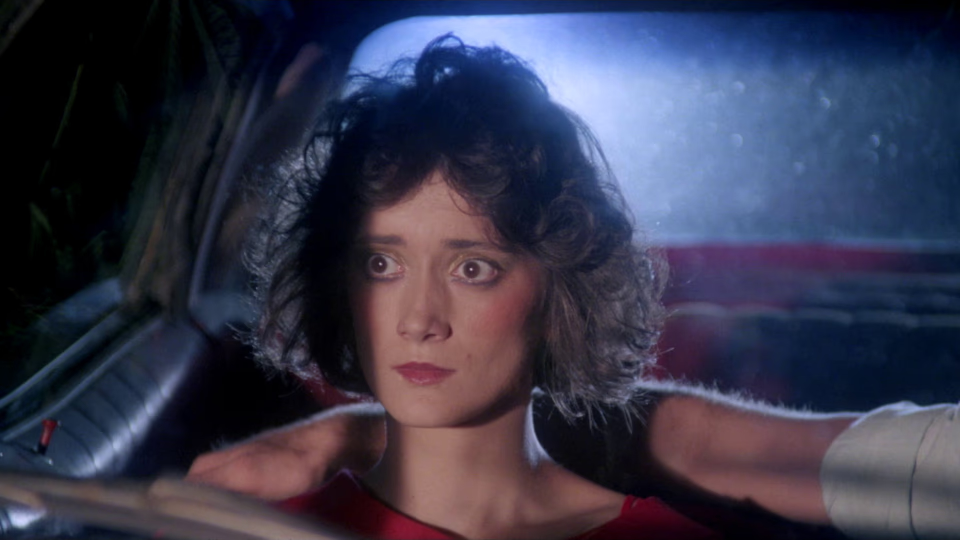
Aenigma opens with a cruel prank. Kathy, a plain girl at a Boston boarding school, thinks she’s going on a date. The boy drives her to a remote spot. They make out. What she doesn’t know is that he’s wired for sound, broadcasting every sigh to her classmates parked nearby. When they reveal themselves laughing, Kathy flees, gets hit by a car, and ends up in a coma.
From her hospital bed, she reaches out. A new student named Eva arrives at the school mid-term—rich family, recent nervous breakdown—and Kathy hitches a ride inside her mind. Eva begins settling scores with the girls who laughed, deploying what appear to be supernatural powers. She also finds time to seduce a doctor who happens to be overseeing Kathy’s case.
This is the setup for Lucio Fulci’s 1987 film, and as setups go, it’s not bad. Fulci made genuinely unnerving horror in The Beyond and City of the Living Dead, movies that felt like waking nightmares where the whole picture might crack your sanity if you could ever see it clearly. Here he seems to be working from a shopping list. The teen revenge from Carrie. The boarding school setting from Suspiria and Phenomena. The comatose killer from Patrick. What’s missing is any thread connecting these borrowed parts.
Plot lines are introduced and abandoned. It’s hinted the school administrators may be involved in something sinister. Never mentioned again. Kathy’s mother, the school janitor, apparently has powers of her own—her eyes go blood red—but what she does with them is anybody’s guess. Whether Eva retains any independent will is unclear. The finale hinges on a character’s sudden heroism that the script hasn’t earned and can’t explain.
Then there are the victims, who seem to have forgotten they possess working limbs. A girl wakes up covered in snails. A reasonable person would sit up and brush them off. This girl lies perfectly still and whimpers until one crawls into her mouth. It’s a striking image, and Fulci knows it, because he did it better in The Beyond with tarantulas—and in that film, the victim had fallen from a ladder and was paralyzed. Here the explanation is, what, squeamishness? Later, a girl in a museum watches a painting bleed onto her face. She doesn’t step aside. She doesn’t even flinch until she’s drenched. And if Kathy is using telekinesis to freeze these people in place, that only makes it worse. If the best revenge you can imagine against a paralyzed victim is a slow snail, you’ve run out of ideas.
There are small pleasures. Fulci delivers his trademark smash-zooms to terrified eyes—though there’s no ocular violence, which feels like a missed opportunity, especially in the finale, which teases a payoff it never delivers. There is a scene where the doctor and a girl tumble into a bed that collapses under them, and I would bet money that wasn’t planned. Their surprise looks too real. I laughed, and so did they.
But too often, the film feels thrown together. Consider how it’s set in Boston but was shot in Sarajevo. The countryside visible through the college windows wouldn’t fool anyone. The opening and closing building shots are obvious miniatures. Why set it in Boston at all?
In the end, Aenigma is another lesser Fulci. Not the catastrophe of Manhattan Baby, but a disappointment from a director who opened the decade with genre-defining masterpieces. Fans will find it a curiosity. Everyone else should start with the films he was borrowing from.