The Risk

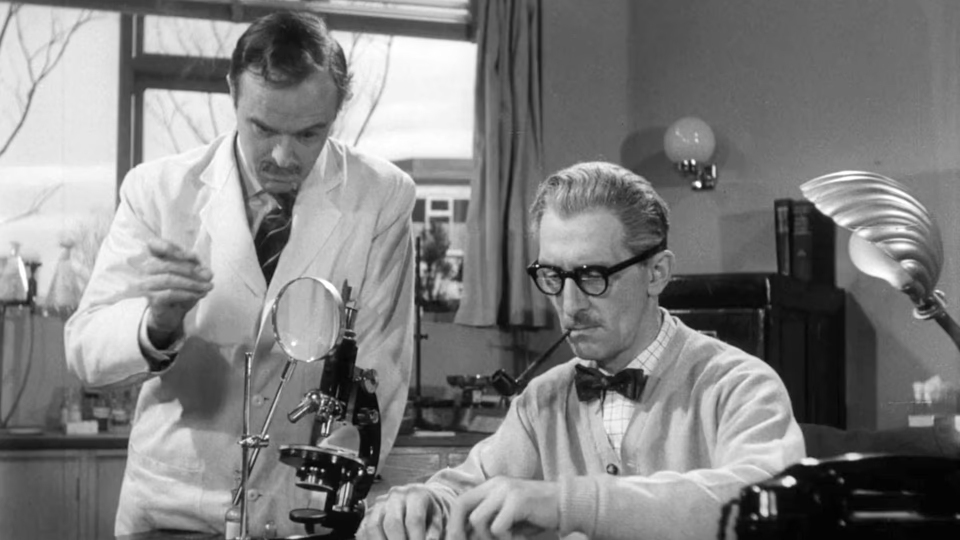
Peter Cushing plays a scientist who has spent a decade developing cures for third-world diseases and now wants to publish. The government says no. His research, they fear, could be weaponized. One of his colleagues grumbles about it at the pub, which is never a good idea in a British thriller, and soon finds himself tangled with people who’d like very much to see that research leave the country.
This is a modest picture that keeps surprising you. The screenplay is talky—it would play fine on a stage—but the cast elevates every line. Sporting a grey wig and mustache, Cushing brings a quiet paternal authority. Donald Pleasance oozes in as a go-between you wouldn’t trust to hold your coat. Thorley Walters slogs through as an overworked security man who would misplace his own clearance. Raymond Huntley plays the government minister, and here the film does something unexpected: it lets him be right.
Huntley’s minister could have been a cardboard bureaucrat. Instead, he makes a case you can’t easily dismiss. He’s an elected official. His constituents would accept no risk to British lives, not even to save millions abroad. It’s a cold argument, and an honest one, and the kind of writing you don’t expect from a picture shot on a shoestring. Credit Nigel Balchin’s source novel, but credit the film for knowing what to keep.
Tony Britton handles the lead capably. He’s the scientist tempted to go rogue, and he’s fine, though the picture is smart enough to surround him with scene-stealers and let them work.
Not everything lands. Virginia Maskell plays a woman on Cushing’s team, and for a moment you think the film might do something interesting with her. It doesn’t. She exists to be emotional, and Cushing gets a speech about how women are no good in science because they’re always falling in or out of love. In a film otherwise allergic to stock characters, she’s a stock character. It stings.
Ian Bannen plays her former fiancé, a Korean War veteran who lost both arms and most of his composure. The role calls for intensity. Bannen delivers it, then keeps delivering it. Where Cushing and Pleasance disappear into their parts, Bannen never quite lets you forget he’s acting.
But the film’s real weakness is a lack of ambition. It raises thorny questions about collectivism, tribalism, and individual conscience, then wraps everything up with a bow and a sight gag involving a monkey. At eighty-one minutes, it doesn’t overstay its welcome, but it leaves before finishing the conversation.