The Castle of the Living Dead

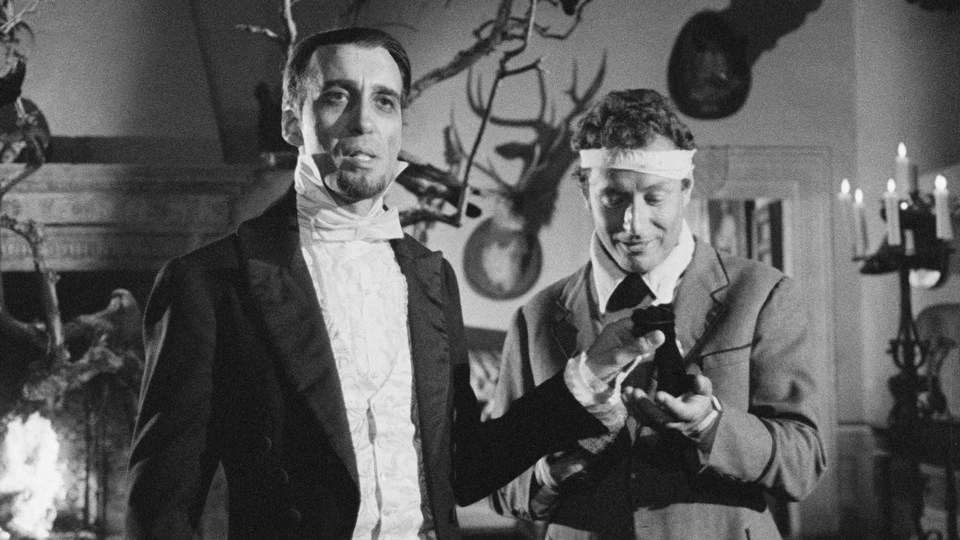
Here’s a gothic horror starring Christopher Lee, backed with ample production values, shot in atmospheric Italian castles, and featuring a young Donald Sutherland in his screen debut. What more could you want?
Well, scares for a start.
The setup holds promise. In post-Napoleonic France, a theater troupe travels to perform for a mysterious nobleman at his remote castle. The woods around are silent. A bird sits frozen on a branch. A witch emerges, rhyming warnings to avoid the castle. The troupe ignores her and meets the castle’s owner (Lee), who has perfected a formula that kills and embalms in an instant. He wants human specimens. Cue the screaming.
Director Warren Kiefer secured magnificent locations. The Orsini-Odescalchi castle and Bomarzo sculpture garden deliver genuine gothic atmosphere with their monstrous statues and wooded isolation. But Kiefer mistakes atmosphere for horror. He stacks quirks like curios in a cabinet—the rhyming witch, the theater performance, nods to Psycho and The Most Dangerous Game—then forgets to make any of it scary. Characters spend their time telling us how frightened they are. We remain unmoved.
Christopher Lee towers above this mess. His Count Drago radiates the same magnetic menace he brought to Dracula—that commanding baritone, those darkened eyes, the goatee and slicked hair creating an image both refined and predatory. He’s playing a mad scientist instead of a vampire, but the charisma translates. When Lee appears, the film snaps to attention. The tragedy is he vanishes too often.
Donald Sutherland nearly compensates in dual roles as both a bumbling constable and the rhyming witch. His performances feel imported from a livelier, stranger film—one I’d rather be watching—but he too is gone far too long.
Meanwhile, we’re left with characters who behave like they’re following stage directions instead of survival instincts. Laura, our de facto damsel, ping-pongs between iron-willed heroine and helpless victim, sometimes within the same scene. Eric, our supposed hero, exists only as “former soldier.” When Laura screams from the next room, he grabs a gun and creeps toward the sound with theatrical caution when any real person would run. We don’t fear for them because we don’t believe in them. And without a sense of fear, the film slides into boredom.
Technical problems compound the tedium. The producer lost the soundtrack and continuity reports, forcing actors to dub dialogue without knowing their original lines. Characters mouth words while we hear grunts. Some scenes play completely out of sync. It’s distracting even by Italian genre standards.
The black-and-white photography delivers competent framing but catastrophically wrong mood. Outdoor scenes look like cheerful afternoon strolls, not Gothic dread. Day-for-night sequences feature bright skies and harsh shadows. It’s as though Kiefer couldn’t decide if he was making a horror or fairy tale.
A shame. All the ingredients sit on the counter—Lee’s presence, Sutherland’s energy, those magnificent locations. Kiefer just didn’t know the recipe. He got distracted by quirks and references, by theatrical performances and rhyming witches, while forgetting that horror films must horrify.
Lee completists will want his performance. Sutherland fans might enjoy spotting him early. Everyone else should heed the witch’s warning.