The Bat

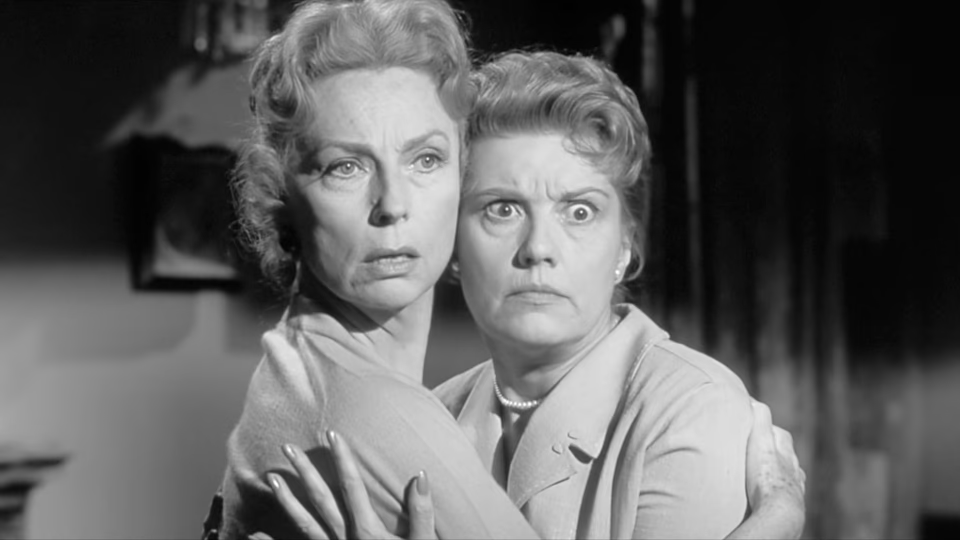
Don’t let Alvino Rey’s jazzy theme fool you, this 1959 mystery-thriller feels embalmed in its 1920s stage origins.
Agnes Moorehead plays mystery writer Cornelia Van Gorder, holed up in a rented mansion called The Oaks while a killer called “The Bat” terrorizes the town by ripping out women’s throats. Vincent Price—top-billed but criminally underused—plays Dr. Wells, who murders his hunting companion, bank president John Fleming, to steal a million in securities. The Bat then stalks The Oaks, where the money’s hidden.
Right there, the film commits its cardinal sin. It shows us Wells is a murderer within the first twenty minutes. No ambiguity. No suspense. Just expository death, delivered with all the finesse of a hammer to the skull.
What follows is theatrical rigor mortis. Characters stand in place and talk. And talk. And talk some more, explaining things that make no sense and planning actions even dumber than the explanations. Hear hammering upstairs? Don’t lock your doors or summon the guards outside—no, send one person alone to investigate. Because that’s what you do when a throat-ripper is loose.
The script treats logic like a suggestion. Moorehead beans a fleeing assailant with a fireplace poker from twenty feet away—she could work in the circus. Meanwhile, a police detective firing from ambush, from behind cover, somehow misses a target six feet away standing in the open. He gets shot dead for his trouble.
Then there’s the air-tight room. Cornelia gets trapped. Lizzie wakes with a premonition—because of course she does—and hears Cornelia calling through the supposedly sealed walls. What’s carrying the sound? Good vibes? And don’t get me started on the finale, where the killer suddenly masters a secret passage he was hammering at earlier.
And about the killer. His trademark claws look about as lethal as a gardening glove. The film fumbles two perfect opportunities to show them in action. In one scene, the Bat cuts glass with a glass cutter when he could’ve used the claws. Later, he cuts phone lines with a knife. A knife! The signature weapon is just for show—its biggest impact lies in making it awkward for him to turn doorknobs.
Price deserved better. He always commits, but here he’s a glorified plot device, disappearing for long stretches to deliver exposition when summoned. It’s a waste of his considerable gifts.
The opening shot should’ve been our warning: The Oaks is clearly a model, a gothic mansion awkwardly grafted onto a gothic castle, as if the art department changed its mind mid-construction but couldn’t afford to start over. That’s this whole movie—half-baked ideas welded together without regard for logic or entertainment.
The film’s sole legacy? An early silhouette of the titular Bat with his fedora and clawed hand prefigures Freddy Krueger. Was Wes Craven watching?