Basket Case 2

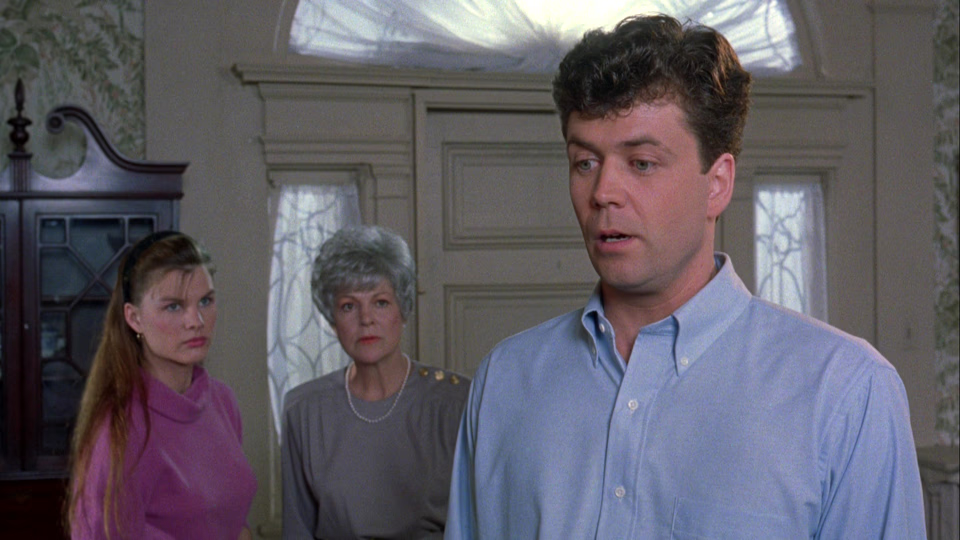
Frank Henenlotter’s sequel picks up where the original left off. Duane Bradley and his surgically detached twin Belial are scraped off a Times Square sidewalk and delivered to a hospital under armed guard. Belial is a head with arms and a bad attitude; Duane is the brother who carried him around in a wicker basket. They escape and find refuge with Granny Ruth, who runs a Staten Island home for “unique individuals.” Some have too many limbs. One is essentially a very large nose. Henenlotter photographs them with a tenderness that betrays his allegiance.
Duane, played again by Kevin VanHentenryck, spends the first stretch swaddled in bandages and emerges with a haircut and the face of a man who has been through something, which in this case is the 1980s. He falls for Ruth’s granddaughter Susan and starts talking about running away to a normal life. Belial meanwhile discovers Eve, a female torso with eyelashes, and the movie stages a courtship between two puppets that is somehow both revolting and rather sweet. Then a nosy reporter shows up to ruin everything.
Henenlotter didn’t want to make a Basket Case sequel. He wrote something called House of Freaks, with the unique individuals at the center and Duane in a corner. The producers told him to put Duane back up front and slap a 2 on the title. He agreed because the same men were paying for Frankenhooker, which arrived later the same year and is filthier, funnier, and better. This one is oddly polite. The first half hour is nearly bloodless, and for a long stretch the goriest footage is flashback material from 1982.
Things pick up in the third act. VanHentenryck curdles from whiny victim to Norman Bates-style maniac. A photographer is lured into the attic and Belial goes to work in stroboscopic bursts of flash, an ingenious way to shoot a puppet and the best-directed sequence in the film. Granny Ruth later counsels Belial that ripping the faces off people may not be in his best interest. The closing shock involves an appendage best described as the Tremors worm crossbred with the plant from Little Shop of Horrors, and it sets off a chain of events I would not dream of spoiling.
This came out the same year as Clive Barker’s Nightbreed, which tells much the same story: a fugitive shelters among monsters and dooms the sanctuary. Barker’s version is grander and stranger. This one has better jokes but less nerve, and it leaves you with the nagging sense that the man behind the camera would rather have been making House of Freaks.