Rendezvous

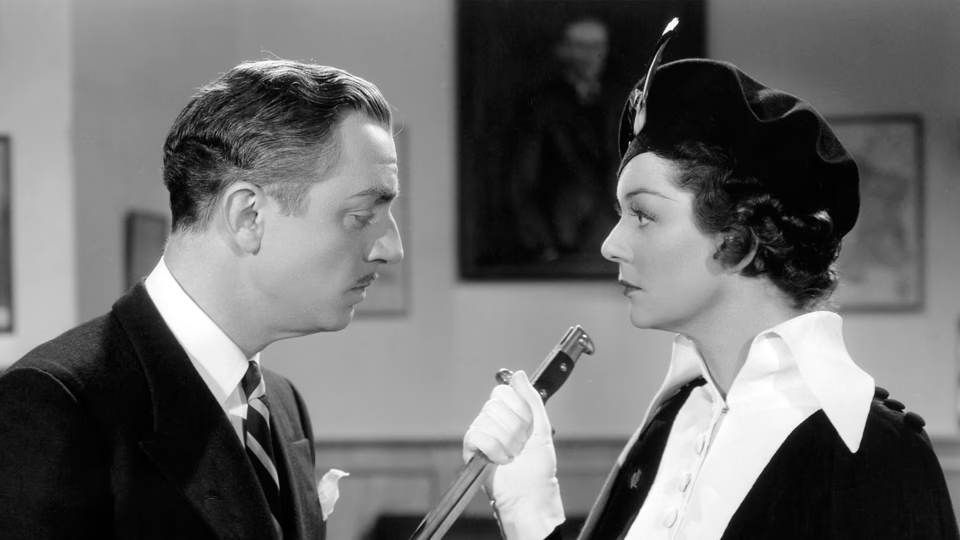
William Powell cracks codes. Rosalind Russell cracks wise. The movie cracks under the strain of trying to be both espionage thriller and screwball romance.
Powell plays a newspaperman-turned-officer who’d rather dodge bullets in France than push pencils in 1917 Washington. But when the Army finds out he’s a cryptography whiz he gets the desk job he’d dreaded. Russell’s the assistant war secretary’s niece, a whirlwind of energy who gets Powell reassigned, drugs his coffee, sabotages spy operations out of jealousy, and generally behaves as if World War I is merely an inconvenient backdrop to her meet-cute.
For a while, it works. Russell channels Myrna Loy (who was in a contract dispute with MGM) with surprising spark. She and Powell generate real heat in their early scenes. After Russell spikes his coffee with sleeping pills (because he’s working too hard, you see), Powell shoos her out and tells a guard: “If she tries to get in again use your gun. Don’t shoot to kill, just wing her. I don’t want her haunting me!” Good stuff.
But it also reveals the film’s fatal flaw.
The espionage sequences are admirably detailed. Caesar Romero (impossibly young) reveals invisible ink with reagents, phones coded messages to San Diego, routes intelligence through Mexico. Real tradecraft stuff. Meanwhile, Russell’s drugging Powell’s coffee while he’s trying to prevent a troop ship from being sunk.
And it gets worse. Even after Powell’s superior officer is murdered, Russell remains oblivious that actual lives are at stake. She’s not charmingly eccentric. She’s a self-absorbed menace. The finale lurches from somber espionage denouement to breezy romantic resolution via literal deus ex machina—an Irish cop materializes to tie everything up.
There’s also the matter of The Enemy Who Shall Not Be Named. The film is set during WWI. It was shot with explicit references to Germany. Then someone panicked about offending Hitler. Now characters’ voices change mid-sentence, their lips forming words we don’t hear. They even dubbed over Romero’s character’s name for sounding too German. Yet they left in mentions of U-Boats. The incompetence borders on artistic.
A shame, as Russell proves she can hold her own with Powell, even if she’s not quite Loy. The chemistry’s there. The dialogue pops. Consider Russell’s jealous aside about an enemy agent—“She’s bowlegged”—delivered with a perfect self-satisfied smirk. Great line, but a romantic comedy and a wartime thriller can’t share the same screen when one character remains a self-absorbed idiot while people die around her.
That said, if you mentally split this into two separate films, both halves work. If MGM had picked one, they might have had a winner. Instead, Loy looks smart for sitting this one out.