Portrait in Crystal

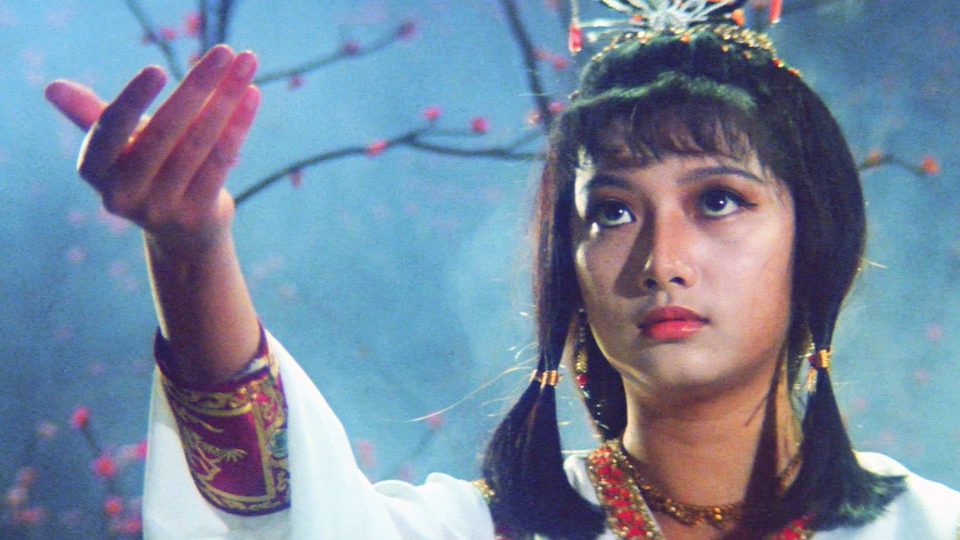
Portrait in Crystal runs seventy-seven minutes and contains the plot of about three movies, four if you count the one about Fatty. More than once I wondered whether the reels had been mixed up with other films starring the same actors. They had not. This is a Shaw Brothers production from 1983, late in the studio’s run, and it plays as if someone decided the prop room should be emptied before the lights went out.
The story concerns an assassin who appears to be made of crystal. Poison Yama, a clan leader with a name to live up to, suspects Long Fei, a retired swordsman who now carves statues. Legend holds that blood spilled on a crystal statue will bring it to life, and Fei happened to bleed on his latest one. Fei goes to produce the statue and clear his name, finds it stolen, and becomes a fugitive, with his sidekick Fatty in tow and Yama’s men close behind. Several characters turn out to be someone, or something, other than they seemed. The movie doesn’t settle on its hero until the third act, so I won’t either.
The opening is a model of efficiency. Five minutes in, credits included, we have met the sculptor and his statue, glimpsed the assassin, and watched a man’s face melt like a candle left on a radiator. The pace rarely flags after that, which is a mercy, because little of what follows survives a second thought. Fei and Fatty flee by boat, notice their oarsman has vanished, and since neither can swim, Fei ties a rope to his sword and throws it a hundred yards to shore. They zip-line to safety. The boat explodes, and Yama’s men surface with breathing tubes, having apparently been loitering underwater the whole time. I had questions, but the movie was already two scenes ahead.
The trouble starts when the film slows down, and I mean in spirit rather than tempo. Midway through it becomes Fatty’s movie. He chases girls, the score switches to brass and chimes, and the footage is undercranked so he scurries like a Hong Kong Benny Hill. These scenes are not funny in any language I know, and they do their real damage later, when the film turns grim and asks us to care.
The gore has been goopy fun all along, from melted faces to stomachs that swell and burst in the manner of Alien, and the silliness peaks when Poison Yama descends from the sky playing a guitar-shaped xylophone made of bone. He strikes the ribs, and animated, multicolored lightning bolts fly out at his enemies. Then the finale veers into something sleazier. A woman is strung up in a fishnet body stocking pulled so tight her flesh bulges through the holes, and the villains slice off pieces to make her talk. Coming after Fatty’s sped-up romp and Yama’s theatrics, this lands less as horror than as whiplash.
The fights are filmed in short, tight shots that hide the wires and the budget. They’re furious anyway. My favorite involves a guard at an assassin’s lair who defends it by whirling at intruders with an intensity better-choreographed films rarely achieve.
Fans of Shaw Brothers who have worked through the classics and want the strange end of the catalog will find plenty here. Viewers who need a movie to make sense should approach with caution. I liked it. The Fatty scenes keep it from being better, but a movie with a bone xylophone that shoots lightning has earned more than a shrug.