Obsession

The One Wish Willow comes in a cardboard box with a cartoon tree on the front, the kind of novelty that sits by a gas station register between the jerky and the lighters shaped like pistols. It costs a few dollars. It works.
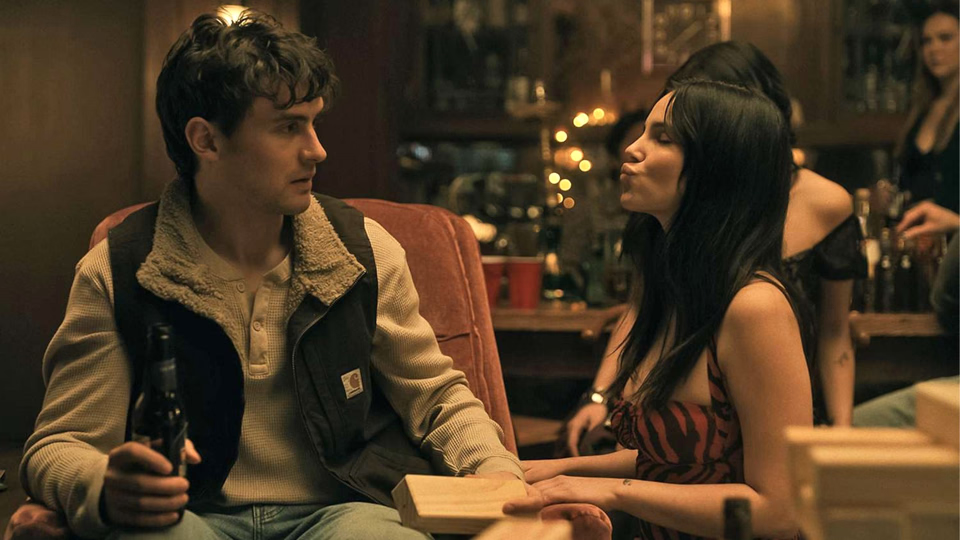
Bear, short for Baron, a name that tells you what his mother once hoped for him, has recently buried his grandmother and appears to be waiting for further instructions. He works at a music shop with three friends. He is in love with one of them, Nikki, and has been for some time, in the way certain men are in love: silently, and at a range of four feet. When she announces she’s quitting, Bear reaches for the words and comes back empty. So he makes his wish: that Nikki love him more than anyone else on earth. It is granted with the literal-mindedness of a hostile attorney.
Inde Navarrette gives the performance that justifies the picture. It is essentially two roles, and she moves between them inside a single sentence, announcing the change with her spine and her breathing before her face gets around to it. Early on her smile carries a knowing wink. Later the same smile arrives with nobody behind it. I believed her completely. Michael Johnston, as Bear, has the duller assignment and does it well; you can hear the small clicks of his mind rearranging the furniture to explain away what Nikki has become. A man that eager to be comfortable will forgive almost anything.
Writer-director Curry Barker comes to features from YouTube and has the sense not to celebrate his promotion. He shoots in 1.50:1, a narrow frame he then narrows further by lighting with table lamps and streetlights, so that half of any given composition is a block of darkness where nothing is happening, or where something is. His camera moves once in a while, a slow zoom, and otherwise sits still and trusts the material. He also understands what he has in his leading actress and gets out of her way.
Barker doesn’t coddle the audience; an early scene involving a cat settles that. He also has a taste for absurdist black comedy, most of it around the Willow itself. The two collide in the film’s best sequence. Bear, in a rare seizure of initiative, dials the customer service number printed on the back of the box. The voice that answers is mellow and unbothered, a surfer who has been on hold since 1994. Then it asks Bear whether he’d like to speak with Nikki. That is the only genuinely frightening moment in the film, and it plays like Barker has been studying the phone call scene in Lost Highway. I hope he keeps studying.
My problem is with the people. These are four twenty-somethings working at a music shop, and their ambitions are still nouns rather than verbs. Nikki wants to be a writer. Sarah wants to be an artist. Nobody has a drawer of finished manuscripts, nobody is hounding a gallery, and they seem to have plenty of time for trivia nights, karaoke, and parties. Ian will fall sideways into a sales job and prosper, and Bear will be behind that counter in 2035. That is a fine setup for a movie, but the trap has a door.
Bear never opens it. He is a coward when the film opens and a coward when it closes, and the cycle is broken by a second Willow rather than by any kind of growth. Unlikable protagonists are fine by me. Boring ones are harder. Bear isn’t a bad man, he’s a child, and children are not interesting unless they are trying to stop being children.
So Obsession is often horrifying, in the sense that violence arrives suddenly and revelations turn the stomach, but it is almost never scary, because the horror on offer, as in It Follows, is the horror of having to grow up and be accountable. Some viewers will feel it in their spine. I watched from across the room. Barker, though, is the real thing, and I’ll be there for whatever he does next.