In the Earth

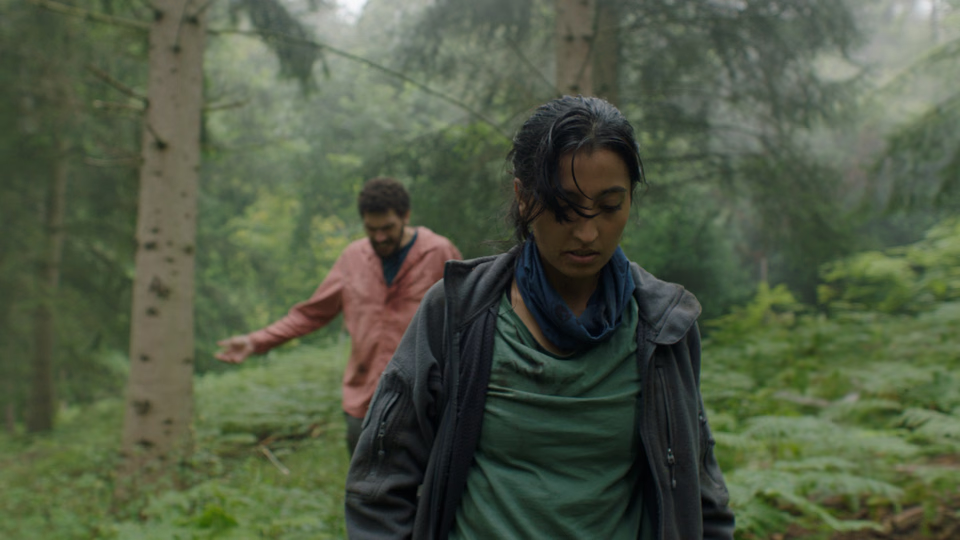
The pandemic produced a small genre of movies made fast and cheap in whatever space was available, and most of them were about people trapped in apartments talking to laptops. Ben Wheatley went outside. He took a crew into a wood near Bristol and came back with a picture in which the trees hate you. I admire the impulse.
Scientist Martin sets out into the forest during an unnamed plague escorted by guide Alma. They’re looking for Olivia, a colleague and former lover of Martin’s, who is studying mycorrhiza, the underground trade agreements between fungi and roots, an arrangement she believes can be manipulated into growing us more food. On the second night someone smashes their equipment and steals their shoes. Then they meet Zach, who has shoes, and opinions about a local woodland spirit called Parnag Fegg, and an axe.
See this one loud, on the best system you can find. From the moment the two of them step under the canopy, the soundtrack starts breathing. Footfalls, wind, birds, all of it a shade too present and too eager to be heard. When they bed down for the night the birdsong turns into people screaming somewhere over the hill. Clint Mansell’s score sits underneath in low drones that never announce themselves and never quite stop, and the effect is to convert a nature documentary into a slow walk into hell.
Dan Martin’s practical effects are the other pleasure. They escalate with real showmanship, from an early bit of foot surgery that had me wincing to a scene involving a tent peg that arrives with a punch line so brazen I cackled aloud.
The trouble is the screenplay. Wheatley had been prepping a sequel to the Tomb Raider reboot when the financing evaporated and the world shut down, leaving a filmmaker who cannot sit still with nothing to do. Desperate to get a film made, he ran full speed, going from pitch to premiere in under a year. That doesn’t leave time for rewrites.
Martin is a sad sack pushed from scene to scene by other people’s decisions. Alma is a blank, competent and kind and nothing else; we learn more about the fungus. Joel Fry and Ellora Torchia are skilled enough to make them tolerable company, which is more than the pages provide. But watch how the movie perks up whenever Reece Shearsmith’s Zach or Hayley Squires’ Olivia walks into it. Those two have secrets, agendas, a private logic. You start to suspect Wheatley wrote them first and bolted on a couple of tourists to give them someone to talk at.
Failures of attention pile up. Our heroes lose their shoes and simply proceed barefoot across miles of English woodland, past a tent, rope, and a knife, none of which suggests footwear to either of them. And the ending, after a long psychedelic barrage of strobes and stutter cuts, resolves into something ambiguous if you’re generous and a cop-out if you’re not. The film has been building an argument that Martin never had any agency at all, that he was walked into this. Then it declines to close the trap.
I have a theory about that. Wheatley has talked about sitting with audiences during the last ten minutes of Kill List and feeling a portion of the room pull away from him. I think he remembers that feeling here, and flinched. He is a man who loves making movies and knows that big rooms keep you making them. But the people who love Kill List love it precisely because of what made the others leave. Try to keep both rooms and you get a film nobody defends. In the Earth is a good time in a dark theater with a big amplifier, but a better film is buried somewhere underneath it, waiting for a second draft that never came.