Dr. Who and the Daleks

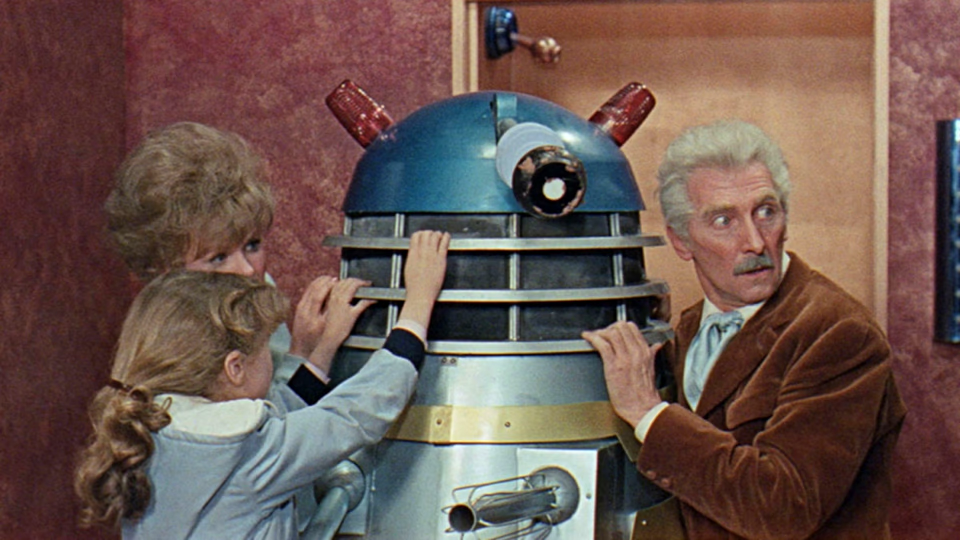
Peter Cushing plays a grandfather who has built a time-travelling space ship in his back garden. The ship whisks him, his granddaughters Barbara and Susan, and Barbara’s boyfriend Ian to a planet caught in a war between the peaceful Thals and the merciless Daleks.
Cushing’s character is Dr. Who. Not “The Doctor,” but an elderly man with a surname and a PhD. He seems mildly surprised by everything, including his own invention. The title promises his movie. The movie disagrees.
The real star is Susan, his grade-school granddaughter, who drives the plot, makes the discoveries, and serves as the audience’s way in. This makes sense for a children’s picture. What doesn’t make sense is dragging Cushing along as dead weight. He’s a passenger in his own vehicle.
And what a waste. Take the restless intellect of his Frankenstein, the moral spine of his Van Helsing, the precision of his Sherlock Holmes, and you have a magnificent Doctor. You wouldn’t even need to change the story much. Have this strange, brilliant man arrive on Susan and Barbara’s doorstep instead of being their grandfather. No aging makeup. No wandering accent. Cushing should have been one of the great Doctors. Instead he plays a befuddled old dear who contributes nothing.
That might be survivable if the comedy worked. It doesn’t. Ian exists to knock things over. He trips. He pushes buttons he shouldn’t. He demonstrates the spatial awareness of a toddler. The filmmakers apparently believed children find clumsiness hilarious. Some do. But the difference between writing for children and writing down to them is lost on this picture.
The plot compounds the insult. A place is introduced as a “deadly mutant swamp.” Four people are promptly sent through it. Five minutes in, Ian decides to wash his face in the swamp water. Deadly, apparently, is a relative term. Later, the Doctor offers the Daleks his ship and they refuse to believe it exists. One wants to ask: how did they think these strangers got to their planet?
The Daleks themselves are fine. They say “destroy” when you want them to say “exterminate,” but they look right, they glide menacingly, and they remain the best thing in the picture. The Thals, meanwhile, wander around in matching outfits, eye paint, and dyed hair, looking like they’re auditioning for a Bowie concert seven years early. For a civilization that’s been scraping through a post-apocalyptic wasteland for centuries, they have remarkably good tailors.
I suspect this film lives warmly in the memories of those who saw it at seven. Nostalgia is a powerful lens. But coming to it now, cold, you see a movie that misunderstands its own best asset. In 1965 the television Doctor was himself a somewhat cranky grandfather, so this adaptation isn’t the betrayal it might appear. But a Doctor with no agency, no plans that work, and no courage when courage is required isn’t a character. He’s furniture. Cushing deserved better. So did the kids.