Deathmaster

A coffin washes ashore in the California sun. The surfer who opens it gets strangled. The coffin gets dragged away. For about three minutes, you think you might have stumbled onto something.
You haven’t.
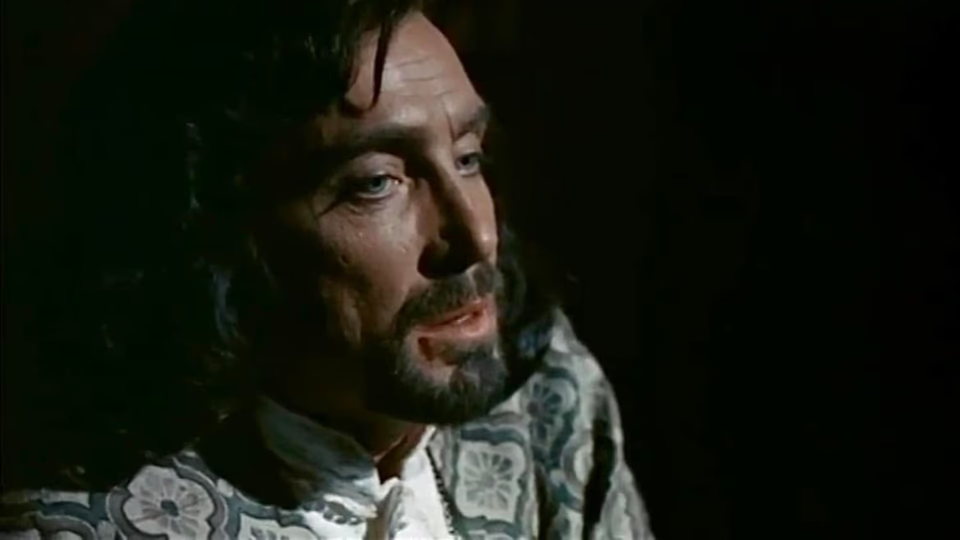
Robert Quarry returns to familiar territory after the superior Count Yorga films, this time playing Khorda (get it? rhymes with “Yorga”), a vampire posing as a hippie guru.
Yes, you read that correctly. The 47-year-old Quarry, sporting a wig that belongs in a community theater production, is supposed to be the spiritual leader of a house full of flower children.
It’s absurd casting, yet Quarry makes it work—or at least tries to. His smooth baritone, those piercing blue eyes, that eerie calm: he’s America’s answer to Hammer’s great horror stars. The man commands the screen even when everything around him is falling apart.
And fall apart it does. The script is a disjointed mess, seemingly assembled from random scenes with no regard for continuity. Early on, our hero, Pico (played by Bill Ewing, who’s also saddled with a terrible wig), uses kung fu to thrash a hulking biker. Surely this skill will prove useful against the vampire hordes, right? Wrong. He never attempts it again, flailing helplessly instead. The scene feels tacked on either to pad the runtime or beef up the trailer.
Then there’s the sunlight problem. Quarry’s coffin washes ashore in broad daylight. Wouldn’t opening it vaporize him instantly? The script mumbles something about “neophyte vampires” wearing protective charms, yet Khorda himself fears the dawn bell. So which is it? Fatal or not?
Worse still, the characters seem to suffer from collective amnesia. Pico witnesses a vampire attack, then immediately asks his girlfriend “What’s going on?” as if nothing happened. They keep asking questions even after deciding to storm Khorda’s lair. Then again, given how the script feels scribbled scene-by-scene, perhaps these questions were meant for the director.
Beyond Quarry, the performances range from merely stilted (Bobby “Monster Mash” Pickett as a hippie) to embarrassingly amateurish. William Jordan’s biker delivers lines that would sound wooden in a first-day table read. When actors stop trying because they know they’re in a turkey, it shows.
Quarry’s casting and the similar plot beats make the film feel like an unofficial Yorga sequel. Except the drop off in quality is so precipitous, you’d be hard-pressed to believe it was the same studio. Besides the weaker supporting cast and sloppy scripting, even the special effects pale. Compare this film’s dead-dog scene to Yorga’s infamous cat sequence.
Indeed, the effects—or lack thereof—betray the film’s overall sense of cheapness. This is a mostly bloodless affair, even more restrained than Hammer’s Dracula from 14 years earlier. Not due to moral qualms, but rather tight purse strings.
The finale sums it up. Khorda leads a Satanic ceremony with Pico’s girl as sacrifice, everyone chanting Gregorian-style—except they’re chanting in English, which transforms the scene into unintentional parody. Then Pico defeats Khorda by throwing leeches in his face. Yes, leeches. Somehow this blinds and disorients the vampire. Why does Khorda keep a bowl of leeches in his tomb? Director Ray Danton lingers so long on Quarry’s overwrought death throes you’re laughing too hard to care.
The film’s one grace note: when Pico staggers back upstairs, all his hippie friends have crumbled to dust. At least someone had the right idea.
Quarry deserved better. We all did.