A History of Violence

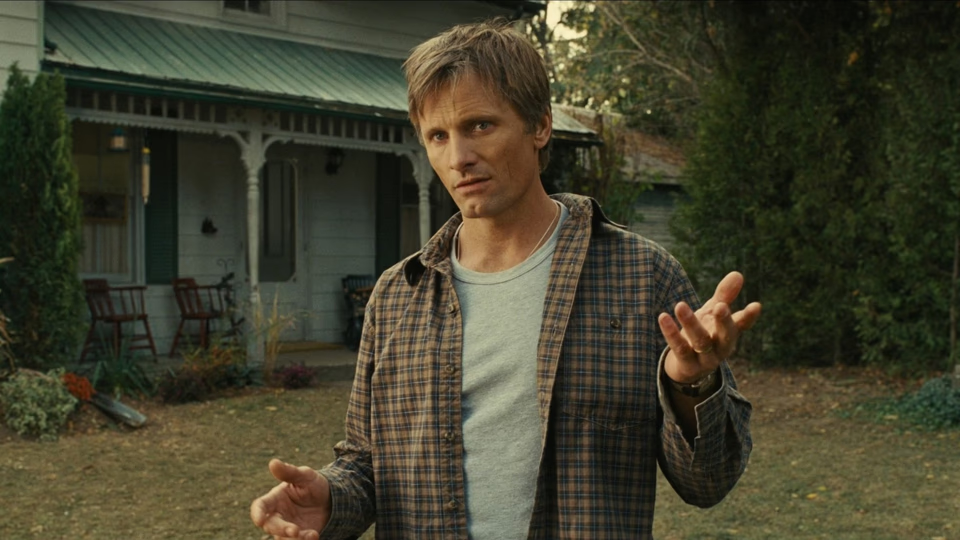
David Cronenberg wants to have his cake and eat it too. He gives us a Jason Statham setup, then pulls back to ask: why do we love watching this? The problem is, manipulation doesn’t work when you point out you’re manipulating.
Viggo Mortensen plays Tom Stall, small-town diner owner with a picture-perfect family. When psychotic killers threaten his customers, Tom dispatches them with brutal efficiency. His heroics go viral. Bad news for Tom. Ed Harris shows up as Carl Fogarty, an east coast mobster insisting Tom is actually Joey Cusack, a Philadelphia killer with a reputation.
Tom protests. We know better. This is familiar ground—the secret past, the family in peril, the reluctant badass forced back into action. Cronenberg knows we know. He’s counting on it.
Here’s where things get tricky. The film pivots from thriller to domestic drama. Maria Bello, as Tom’s wife, feels betrayed. Their teenage son turns from wholesome kid to mouthy punk overnight. Cronenberg stages a scene where Tom slaps the boy. Are we supposed to cheer? Are we monsters for wanting to?
The manipulation shows. The son’s attitude feels grafted on, his arc going nowhere. The film keeps setting up these moments—Tom and his son, Tom and his wife, Tom’s son and the school bully—but the setups are so contrived they fail to resonate.
Then William Hurt shows up as Tom’s brother—the film’s third psychopathic villain—and the whole thing veers into camp. Hurt chews scenery while Mortensen dispatches inept goons like he’s Jason Bourne. It plays like parody and torpedoes whatever emotional weight Cronenberg was building toward the family reunion finale.
Compare this film to Cronenberg’s Videodrome, which interrogated our relationship with media and had a thesis—addictive media corrupting consumers to horrific ends. That thesis drove the film forward, allowing its surreal climax and dramatic punch to coexist.
This film wants to interrogate our relationship with violence, but lacks a central thesis or even perspective, and the result feels surprisingly hollow. Cronenberg wrote Videodrome, but he didn’t write this and it shows. While his clinical detachment has always been present in his relationship to his characters, here he’s narratively detached, lacking a through-line to string these moments into something greater.
Still, at 96 minutes, the film doesn’t overstay its welcome. It may stall out at times, but Mortensen’s quiet magnetism keeps you rooting for him. The villains—Harris especially—bring menace and personality in equal measure. Bello does admirable work in a role Cronenberg seems more committed to than the screenplay.
And for a film about violence, Cronenberg proves an apt director. Every punch, slash, and gunshot lands. You feel it. You cringe. And the setpiece moments, contrived as they are, work on an exploitation level. Tom’s standoff with Carl, Hurt’s shark-tooth smile welcoming Tom home—they thrill. I may not be sure of what Cronenberg was trying to say with this film, but I am sure of one thing: he could direct a hell of a Statham vehicle.