The Shadow of the Cat

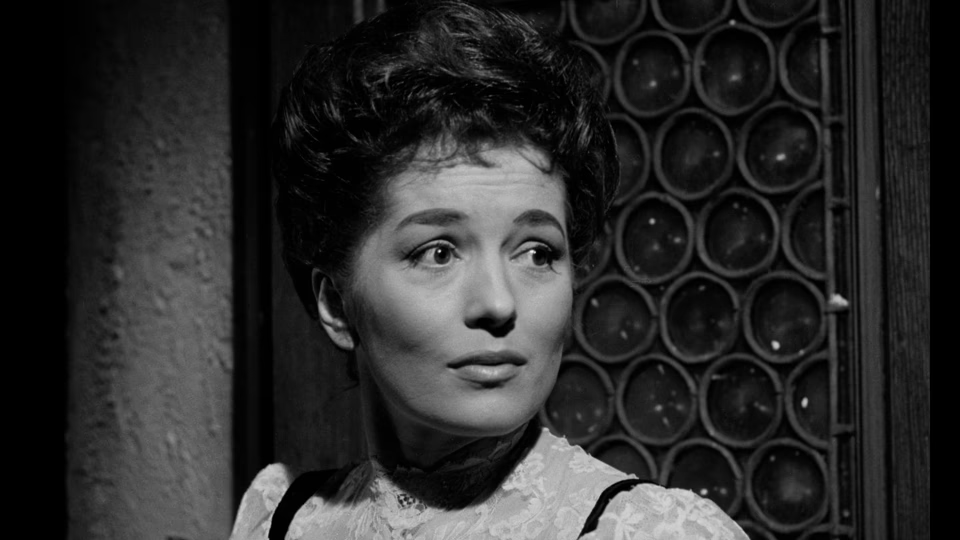
The Shadow of the Cat opens with a murder. An old woman is strangled in her gothic mansion, dragged into the woods, buried in a shallow grave. The camera lingers on dirt cascading onto her pale, dead face. It’s a gritty, nasty moment. For a brief instant, you think you’re watching something serious.
You’re not.
The woman’s husband, played by André Morell, orchestrated the killing. The butler did the dirty work. The maid helped. The motive is money—she was rich, he married her for it, she discovered his greed and rewrote her will. Standard stuff. But here’s the twist: the family cat witnessed everything. Now it’s out for revenge.
Yes, you read that correctly. A housecat is the instrument of justice.
The film desperately wants you to believe this cat is terrifying. Characters shriek about it. They cower from it. They follow it onto window ledges and fall to their deaths. They chase it across rotting logs and tumble into bogs. One victim has a heart attack just looking at it. At one point—and I’m not making this up—the cat pushes a woman down the stairs.
The problem? When we see the cat, it’s just a cat. An ordinary tabby doing ordinary cat things. This is no hound of the Baskervilles. There’s no menace, no otherworldly presence. Just a pet who probably wanted dinner.
Yet director John Gilling treats this material with funereal solemnity. He seems to think he’s crafting an Edgar Allan Poe adaptation, all shadows and dread. What he needed was James Whale’s wit. Whale understood camp. He leaned into absurdity in Bride of Frankenstein and The Old Dark House, turning potential silliness into gothic delight. This film desperately needs that self-awareness. Imagine mustache-twirling villains concocting elaborate and gruesome cat-killing schemes that backfire spectacularly. That might have been fun.
Instead, we get tedium. The script keeps introducing new characters—a virtuous niece played by Barbara Shelley, her newspaperman boyfriend, a police inspector, three more greedy relatives. Each one requires exposition. The film talks and talks and talks. Even at 79 minutes, it drags.
This is technically a Hammer production, though you wouldn’t know it from the credits. Convoluted financing with Universal and ACT Films kept Hammer’s name off the marquee.
But beyond accounting quirks, it doesn’t feel like Hammer. Where are the lurid Eastman colors of The Curse of Frankenstein? Where’s the blood? This tepid black-and-white affair feels like the old Universal horrors Hammer was trying to surpass. The photography is handsome—the house appropriately shadowy—but gorgeous atmospherics can’t salvage scenes of grown adults fleeing in terror from a tabby.
Morell and Shelley try. The whole cast tries. But no amount of commitment can redeem a premise this fundamentally silly played this fundamentally straight. A horror film about a vengeful cat could work. This one doesn’t. It takes itself too seriously and asks too much of our patience.
The cat, at least, seems unbothered by the whole affair.