The Locket

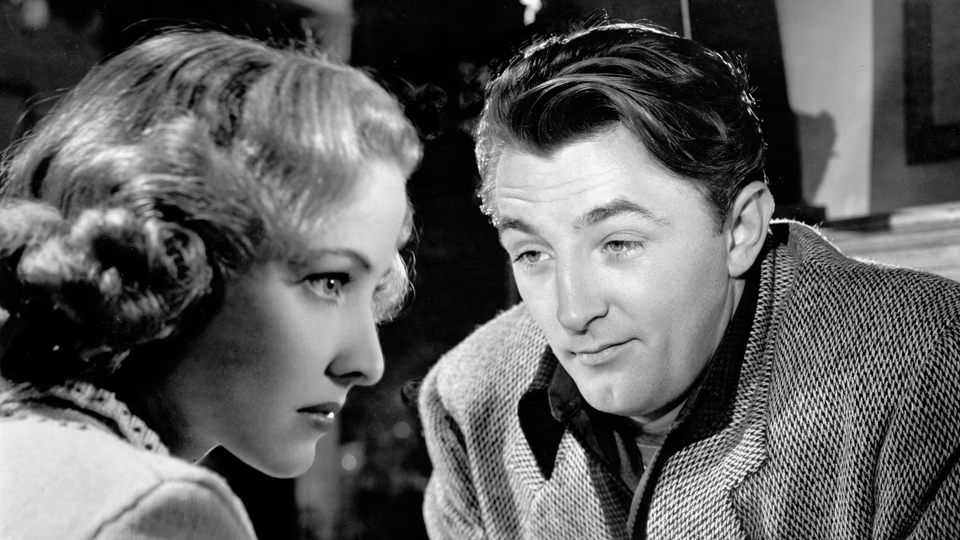
The Locket opens with promise: a stranger crashes a wedding to expose the bride as a monster. What follows is a dizzying narrative structure—flashback within flashback within flashback—that ought to collapse under its own weight. Remarkably, it doesn’t. Director John Brahm keeps the story moving, and the three-deep structure proves less distracting than you’d expect.
Laraine Day plays Nancy, a woman who steals, manipulates, and may have murdered a man. She destroys lives with a smile. Robert Mitchum’s artist loves her, covers for her crimes, then finds the guilt unbearable. Brian Aherne’s psychiatrist marries her next, only to discover stolen jewelry in the rubble of their bombed London flat. She has him committed and walks away clean. Now she’s about to marry again.
Day is extraordinary. She radiates wholesome charm one moment, then goes dead behind the eyes while lying with perfect composure. It’s a performance that could anchor a genuine noir masterpiece. Aherne matches her, bringing the same quiet authority he showed in Vigil in the Night. At 6’3”, he’s one of the few actors who can physically dominate Mitchum, which sells the power dynamic between doctor and struggling artist.
Mitchum himself is good but miscast. His character’s name—Norman Clyde—hints the part wasn’t written for him. Still he makes it work until the script demands he leap from a skyscraper in despair. The laconic Mitchum leaping from a window? Absurd.
That said, the film’s fatal flaw isn’t the casting or even the narrative acrobatics. It’s the explanation. Everything—the theft, the murder, the sociopathy—stems from a childhood incident where ten-year-old Nancy didn’t get to keep a diamond locket. A wealthy woman’s daughter gave it to her, then the mother snatched it back and later accused Nancy of stealing it. The film plays this scene at maximum melodrama, with the child sobbing hysterically, and asks us to accept it as the origin of a killer.
It’s psychobabble dressed as insight. Nonsense masquerading as depth.
A better script would have let Day tell this story herself, maybe multiple times with shifting details. Let us doubt. Let Nancy remain unknowable. Instead, we get certainty where mystery would serve better. The climax—Nancy walking down the aisle, overwhelmed by memories triggered by a cigarette case—features some striking visual work from Brahm as the carpet patterns swirl with her spiraling mind. But the foundation is rotten. A cigarette case undoes her completely? Please.
The film ends with Nancy reverting to a childlike state, carted off to an asylum. It’s meant to be tragic. It feels like a cop-out.
The Locket had the ingredients for greatness: a stellar cast, a confident director, and a structure bold enough to attempt triple-layered flashbacks. What it needed was the courage to leave Nancy’s darkness unexplained, to trust that some people are simply broken in ways we can’t diagnose with a single traumatic memory. Day, Aherne, and even miscast Mitchum deserved better than this script’s tidy psychological formula.
The mystery isn’t why Nancy became what she is. The mystery is why anyone thought they needed to explain it at all.