The Kissing Bandit

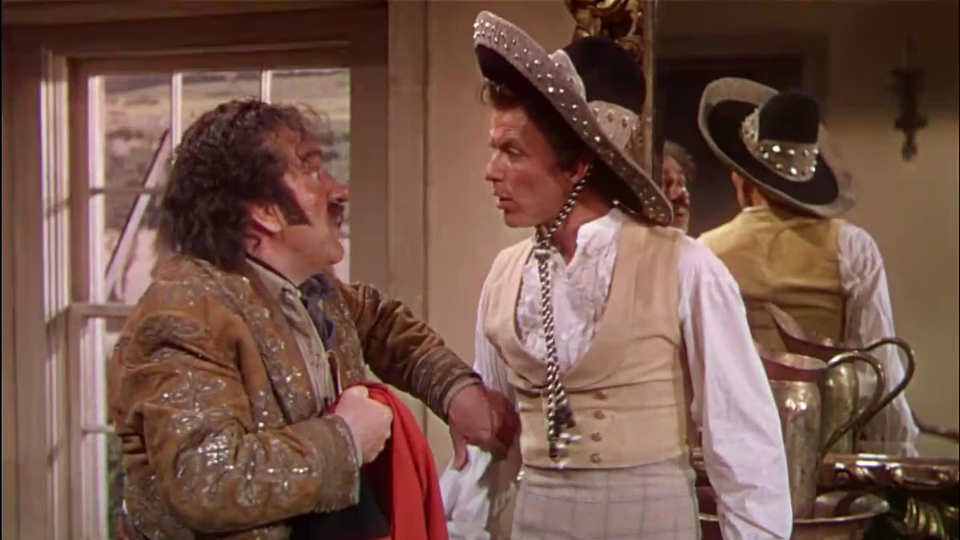
There is a moment, early in The Kissing Bandit, when Frank Sinatra appears on screen in full Mexican bandit regalia—lush toupee, glued sideburns, frilly costume, tights—and you think: someone approved this. Someone at MGM looked at the dailies and said, yes, proceed.
That person has a lot to answer for.
Sinatra plays Ricardo, a Boston college boy who returns to Old California expecting to take over the family inn, only to discover his late father’s secret life as a dashing, womanizing outlaw known as “The Kissing Bandit.” He must now assume the identity. Problem is, he’s a milquetoast who flees from sexually aggressive women.
As a five-minute comedy sketch, the casting might have been inspired lunacy. The combination of the Hoboken accent, the knobby knees in tights, and those sprouting ears framed by artificial sideburns is genuinely, helplessly absurd. But the film runs past 90 minutes. That’s one joke stretched until it snaps.
By 1948, Sinatra had painted himself into a corner. He was still playing the bobby-soxer’s dream—timid, wholesome. The boy next door. The problem was that the boy was now past thirty. His persona had no mechanism for growing up, so his roles didn’t either. He looks a decade older than Ricardo should be, and acts a decade younger. The math doesn’t work.
Compounding matters, comedy was never Sinatra’s gift. Other crooners had partners to play the fool. Martin had Lewis. Bing had Bob Hope. Sinatra had no such partner. So the humiliation falls on him directly. A recurring gag involves a horse throwing him forward repeatedly, which is funny the first time and grating the fourth.
Kathryn Grayson returns as his love interest, a reunion nobody requested. Their previous pairing in It Happened in Brooklyn should have served as a warning. Her operatic soprano and his intimate croon don’t blend—they collide. MGM kept throwing them together hoping to recapture Anchors Aweigh. In James Kaplan’s biography The Voice, Grayson settles the chemistry question: “I couldn’t stand kissing him. He was so skinny, so scrawny.”
At least the Technicolor photography is genuinely beautiful. The sun-drenched mountain locations pop with the rich, saturated color MGM did better than anyone. One suspects the studio was reaching for something like The Adventures of Robin Hood dressed in Zorro’s clothes and set to music. They got the color right. Then they botched it with clumsy day-for-night shots and soundstage skies featuring obvious matte clouds. You could hide such gaffes in black-and-white. In Technicolor, they’re confessions.
For film historians, the picture does preserve early appearances by Ricardo Montalban and Cyd Charisse as fiesta dancers, performing while Sinatra waits to abduct Grayson. This sequence exists on the internet. Seek it out, enjoy it, and spare yourself the surrounding film.
What astonishes most is not that The Kissing Bandit is bad. Bad films happen. What astonishes is that it kept happening—scene after scene, day after day—when any honest glance in the wardrobe mirror should have stopped production cold. The studio system was a machine, and machines don’t stop to reconsider. They just run. This one ran right off a cliff, and everyone involved would prefer you forget.
Do them the kindness.