In the Mouth of Madness

John Carpenter’s 1994 descent into meta-horror arrives with big ambitions and genuine chills, then stumbles over its own cleverness.
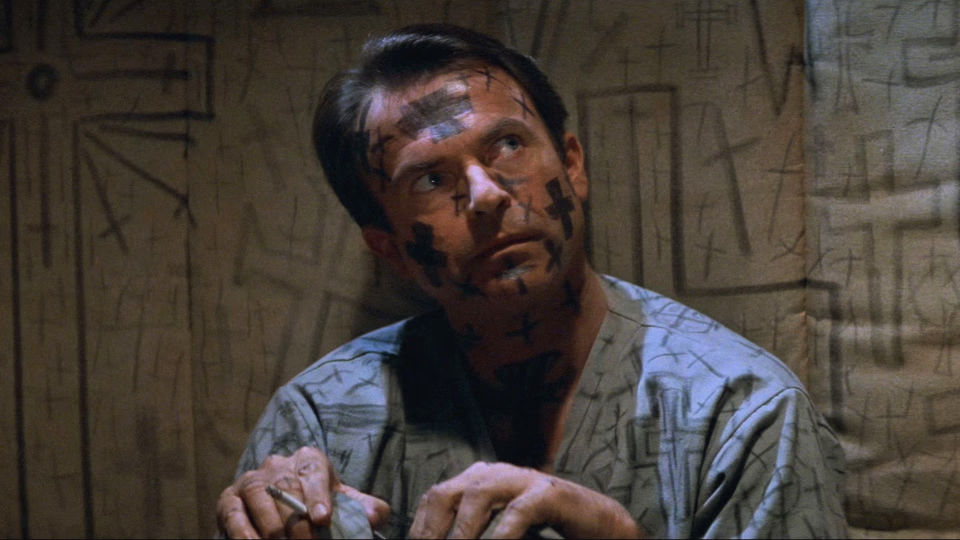
Sam Neill plays John Trent, an insurance investigator committed to an asylum as the film opens. The story unfolds in flashback. Trent’s been hired to find missing horror author Sutter Cane, a writer who supposedly outsells Stephen King. The trail leads to Hobb’s End, a New England town that exists only in Cane’s novels. Or does it?
Neill is terrific. He gives us a skeptic’s slow descent into madness without overselling a single moment. His determination feels authentic, not movie-stupid. When his sanity cracks, we feel the betrayal. The scene where he wakes on a tour bus full of elderly tourists and immediately starts screaming has become iconic for good reason. So has the moment where he sits alone in a movie theater, watching his own life unfold on screen, laughing hysterically at the cosmic joke.
This completes Carpenter’s unofficial apocalypse trilogy, following The Thing and Prince of Darkness. All three end in nihilism. Only The Thing achieves masterpiece status, but this comes closer than Prince of Darkness, trading that film’s atmosphere for a stronger lead and more ambitious plotting.
The script (by studio head Michael De Luca) teems with ideas. An author whose fiction bleeds into reality. Cosmic horrors seeking entry to our world. A mobius strip story where investigator becomes investigated.
The problem? Nobody polished it. The film can’t decide what it wants to be. Sutter Cane’s book covers ape Stephen King’s iconic designs, but a character insists “You can forget about Stephen King.” The horror skews Lovecraftian—old ones, cosmic dread—yet Hobb’s End plays like King’s Castle Rock. Lovecraft loved coastal horror; this town sits landlocked.
Worst of all, when the trap finally springs, it surprises but also cheats, withholding crucial information like a whodunit withholding evidence.
Who rewrites the boss’s script? Apparently no one.
Crucially, the film lacks atmosphere. Prince of Darkness compensated for weak story with suffocating dread. This one never finds it. The early asylum scenes work. The night drive to Hobb’s End works. Once we arrive, the dread evaporates. The black church (meant to be “the seat of an evil older than mankind”) isn’t black. It’s clearly a Greek Catholic church with paved parking and street lamps. Neill wanders a town where the children have supposedly murdered all the adults, yet someone served him a beer at the local bar. He never feels endangered, just out of place.
Budget compromises surface throughout. Canadian locations fail to convince as New York City. A would-be iconic alley confrontation plays out on streets that scream “not Manhattan.” The climactic “army of unspeakable figures” numbers three or four creatures. They look great, but where’s the apocalypse?
Casting is hit-and-miss. Neill is perfect. David Warner’s cameo works. But Jürgen Prochnow as Sutter Cane? He radiates action-villain testosterone, not bookish menace. His German accent bleeds through every line. Jeffrey Combs would have been perfect. Geoffrey Rush, Tom Wilkinson—anyone slighter, more cerebral. Prochnow doesn’t sink the ship, but he’s wrong.
Carpenter usually conjures dread from the everyday (see Halloween). Here, with so much plot competing for attention, he loses focus. The film runs 95 minutes and packs in enough story for two hours. That keeps things moving. But when you’re aiming for apocalyptic Lovecraftian horror, you need time to build atmosphere.
Still, I enjoyed it. Neill’s performance carries considerable weight. The sheer volume of ideas thrown at the screen keeps things interesting. When it works—and it works often enough—you glimpse the film it could have been. A true Lovecraftian apocalypse, reality unspooling at the seams.
Instead, it reaches for greatness and settles for good. Disappointing, yes. But entertaining? Absolutely.