Skip to content

by Frank Showalter

Tab to navigateESC to close

Clue

B-: 3.5 stars (out of 5)
1985 | United States | 94 min | More...
Reviewed Aug 27, 2026

The rain is coming down in buckets, the mansion is up on a hill where no one can hear you scream, and the butler has dog poop on his shoe.

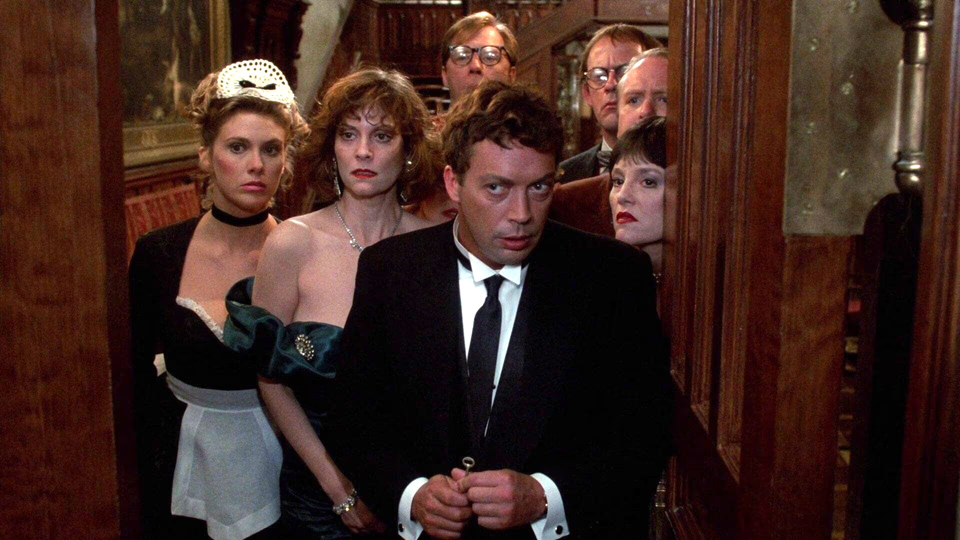
We are in New England in 1954, and six strangers have been summoned to dinner under assumed names. Over the meal they learn that they share a blackmailer, and that he is the host. He is dead in the study before dessert, the police are on the way, and the guests scatter through the house, trying to establish which of them is the murderer before the body count makes the question academic.

The film is nominally based on the Parker Brothers board game, which is a little like basing a picture on a deck of cards. Jonathan Lynn, who wrote and directed it, sensibly ignores the board and goes after what the board was ripping off in the first place: the drawing-room mysteries and stage farces of the 1930s, where everyone has a motive and a secret and the lights go out at exactly the wrong moment. Lynn knows this territory. He wrote Yes, Minister for the BBC, and he understands that comedy is people being terribly polite while the situation gets worse.

What he doesn’t have is permission. This is a PG picture, and you can feel the rating sitting in the room like a chaperone. There is a killer loose with a lead pipe, a wrench, and a knife, and nobody bleeds. The gags get similarly sanded down. When a police officer turns up, the guests stage a tableau of two couples necking so he’ll excuse himself in embarrassment; the punchline is that two of the participants are corpses being worked like puppets. It’s a good idea. John Landis, who produced and cooked up the story, did far more outrageous things in Animal House and The Kentucky Fried Movie. Here everyone is on their best behavior, and best behavior is not what farce runs on.

The house has problems, too. The ground floor is used beautifully, with secret passages that dump people into the wrong rooms at the wrong times. The upper floors appear to be where the production stored its furniture. Nobody sleeps anywhere. No passage goes up or down. When the guests split into pairs to search, only one pair finds anything, which is the movie admitting it doesn’t want to spend the money.

And yet I enjoyed it, and the reason is Tim Curry. As Wadsworth the butler he is arch and dry and slightly bored, and then without warning he is sprinting through the house re-enacting the entire evening at a dead run, arms flying, eyes enormous, talking so fast the other actors have to physically get out of his way. He is playing the material at the exact pitch it requires, which is to say he is the only one who seems to know what movie he is in. Madeline Kahn gets close, doing a widow with a suspicious number of dead husbands and delivering a line about flames on the side of her face that she made up herself and that has outlived the film. Christopher Lloyd, Michael McKean and Martin Mull are pros doing pro work. Curry is doing something better.

The original release sent three different endings to three different sets of theaters, a cash-grab stunt meant to entice repeat viewings. But on the home video release all three run in a row, and something better emerges: watching them back to back, you see how neatly each one accuses a different person. What you think is clockwork plotting turns out to be three-card monte. The genre has been pulling that trick for fifty years. Here you get to watch it happen three times in eight minutes.

Curry keeps hinting at the sharper, meaner, more unhinged comedy that got left in the pitch meeting, one that might have had some fun with the idea of families gathering around the coffee table to play a game about homicide. Instead, we get a pleasant, overqualified party. Watch it for him and wonder why nobody in Hollywood ever wrote him another one.