The Thirteenth Chair

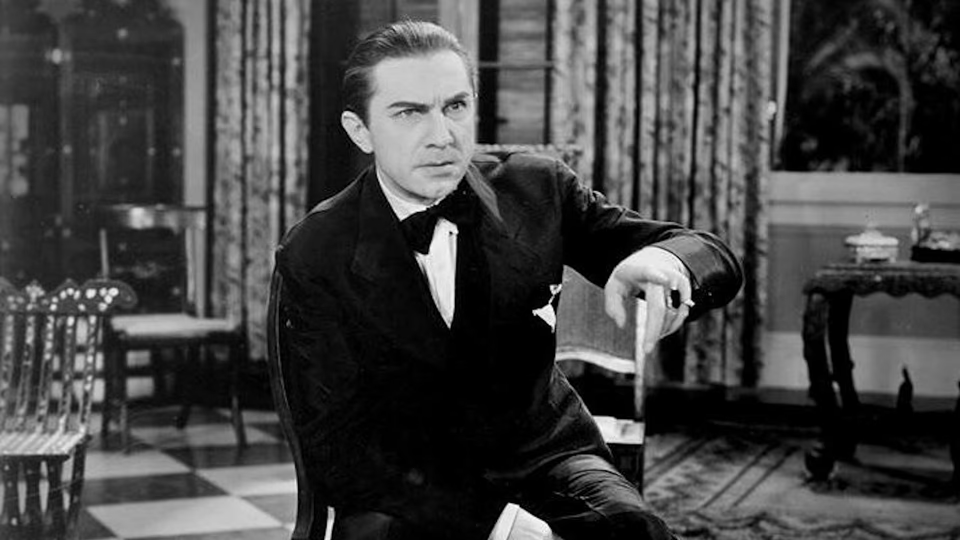
Tod Browning’s The Thirteenth Chair creaks like old floorboards. This murder mystery, shot in the uncertain early days of sound, feels less like cinema and more like eavesdropping on a stage play.
The plot? A British estate in Calcutta. Thirteen suspects. One murder. A séance. Now two murders. Bela Lugosi plays the police inspector called in. This is Lugosi’s first talkie, not Dracula, and his first collaboration with Browning, predating the count by two years.
But back to this tepid affair.
Sound recording shackled Browning’s camera to the floor. Most shots simply sit there, static and lifeless, while actors half-shout their dialogue like they’re projecting to the back row. Margaret Wycherly, playing the medium, and Lugosi are the only ones who understand they’re making a movie, not performing in a theater.
Browning tries to compensate with editing, cutting to closeups to break the monotony. Sometimes it works, but consider one baffling sequence, which begins with Lugosi, Wycherly, and two other actors in a wide shot. Browning then cuts to a tighter shot of Wycherly and the two other actors. Wycherly delivers a monologue but—midway through—points off-screen, presumably to Lugosi, and says “You…” then walks out of frame. The camera lingers on two remaining actors who look after her for a count of five. Then cut to Lugosi, sitting in a chair looking away from the camera. We hold on him—motionless—for a full ten seconds before Wycherly enters the frame and finishes her sentence. A later wide shot reveals she’d travelled about three steps.
But the film’s most egregious sin? Two extended scenes of pure blackness when the lights go out during the séance. We hear shrieks. Cries. Frightened gasps. Browning has essentially swapped cinema for radio. Even 1929 audiences must have felt cheated.
Lugosi, to his credit, commands attention. He’s tall, imposing, smartly dressed. That sharp gaze, that arched finger pointing—he might as well be playing Dracula’s more civilized cousin. Browning apparently saw Lugosi performing Dracula on stage and reworked the inspector role to fit him, ditching the original character’s comedic lightness.1 Smart move. Lugosi elevates everything he touches here.
As for the mystery itself? A snoozer. The script withholds crucial information until the finale, then dumps reveal after improbable reveal without following any logical rules. It’s a cheat, dressed up as cleverness.
One suspects Browning knew what he had: a stage-bound talkie with a flimsy mystery at its center. Casting Lugosi was his Hail Mary pass, an attempt to inject some voltage into a lifeless affair.
It almost worked. Almost.
Footnotes
-
Arthur Lennig, The Immortal Count: The Life and Films of Bela Lugosi (The University Press of Kentucky, 2003), 103. ↩︎