The Mephisto Waltz

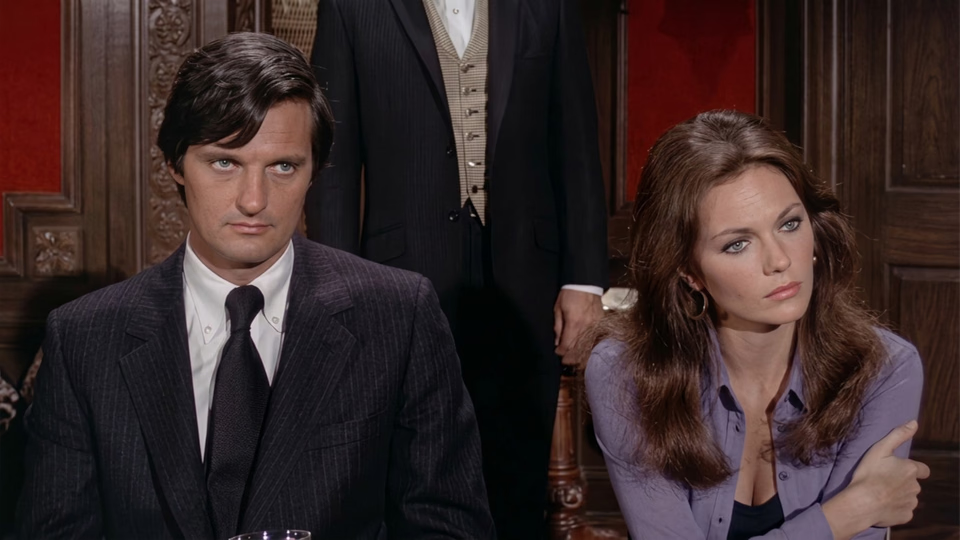
Duncan Ely, the great pianist, agrees to an interview with a music writer and then spends it looking at the writer’s hands. He looks at them the way a man on a diet looks at the dessert cart. The writer is Myles Clarkson, played by Alan Alda, who once wanted to be a concert pianist and settled for writing about the ones who made it. Ely, played by Curd Jürgens, made it, and he is dying of leukemia. He is also a Satanist, and he has worked out a way to leave his failing body and move into a younger one with a better reach.
Myles’s wife, Paula, played by Jacqueline Bisset, is the first to notice the change. Her husband plays better now. He drinks better Scotch and wears better suits. These are the symptoms of demonic possession in The Mephisto Waltz, and they would also describe a man who got a promotion. Paula starts asking questions, and people close to her start dying, always offscreen, as if out of courtesy.
The film arrived three years after Rosemary’s Baby and would like you to remember that. Move the Dakota to a Los Angeles mansion, trade the nosy old neighbors for decadent party guests, and you have the outline. You do not have Polanski’s patience, or his gift for making a kitchen more frightening than a crypt. The producer was Quinn Martin, of The Fugitive, and the picture has the look of a Tuesday night on ABC. Ely’s house is enormous from the driveway and seems to contain three rooms. Dream sequences are flagged with a star filter and smeared edges, so we know we can relax.
Bisset carries the movie and should have been billed first. Alda is likable, but compare him to Andrew Robinson in Hellraiser, which tells much the same story: when his daughter finds him in the bedroom near the end, you know from one look at his eyes that the man inside is wearing borrowed flesh.
Jürgens gets one memorable moment, pale and towering in a dream, and he anticipates Angus Scrimm’s Tall Man in Phantasm by most of a decade. Barbara Parkins plays Ely’s daughter Roxanne, whose devotion to her father goes well past a daughter’s. Her scenes with Bisset have a cold edge, two women sizing each other up, and each time the film backs away from them as if worried about the sponsors.
The skeptics in the story have a theory: Satanism is just an excuse for rich people to sleep with each other, since the rich have always needed a theme for their parties. That is a sharp idea, but the movie can’t make it sit beside its own hocus-pocus, in which a curse is applied by daubing the victim’s forehead with what appears to be Selsun Blue. The rules bend to suit the reel. Paula breaks into Ely’s house and walks off with his occult paraphernalia, which he leaves on display like a bowling trophy. As she returns home, she has a stroke at the wheel and crashes. If they can reach her in traffic, why couldn’t they reach her in the house? I had time to wonder about that because the film runs nearly two hours. At ninety minutes I might have been too busy.
At forty-five it would have made a fine Tales from the Crypt, with the Crypt Keeper cackling over the twist ending, which is built like a punchline and deserves the delivery. Fans of early-’70s occult melodrama will find the furnishings familiar and the Jerry Goldsmith score doing more work than anyone on the screen. Everyone else will be checking the time.
Twenty-some years ago I called The Mephisto Waltz quite forgettable. I watched it again last night, and I am both pleased and sorry to report that I was right.