The House That Jack Built

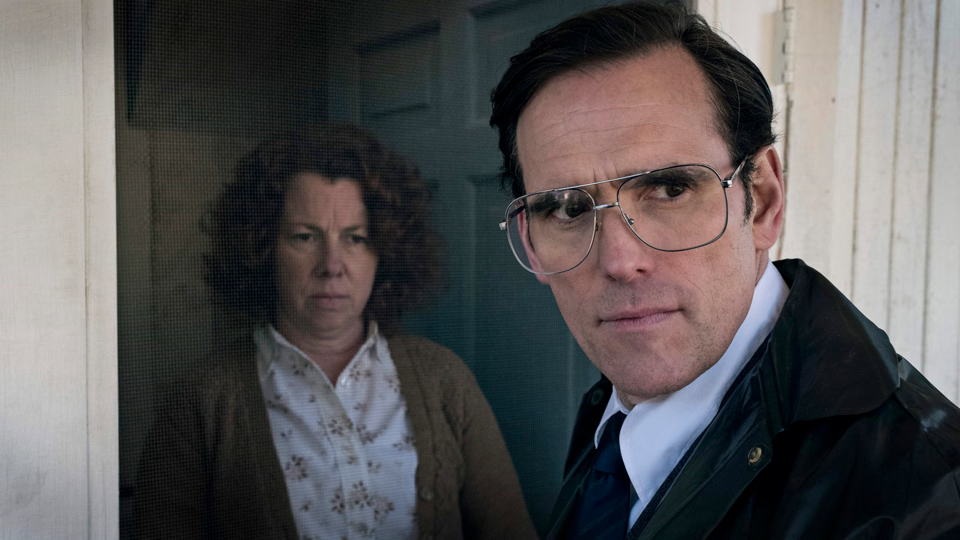
Jack, played by Matt Dillon, is an engineer in 1970s Washington state, living comfortably on inherited money and dreaming of becoming an architect. He also kills people.
Lars von Trier organizes his picture as a confession delivered to an unseen listener, who keeps interrupting with objections, and who mostly sounds bored. This is a smart device. We cannot pretend we are watching a monster in a cage when the monster is explaining himself in a reasonable voice and someone offscreen is already tired of the explanation.
Jack promises us five “randomly chosen incidents” across twelve years. Random is a lie. These are the ones that flatter him.
Incident one: a stranded motorist, played by Uma Thurman, chatters, insults Jack, and helpfully points out that the car jack she asked him to fix would make a fine murder weapon. He obliges. Incident two: he talks his way into a widow’s living room and strangles her. Incident three takes a girlfriend and her two small sons to a remote target range for a picnic, and I will say only that it is close to unwatchable, which I intend as description rather than complaint. Incident four introduces a woman named Jacqueline whom Jack insists on calling Simple. Incident five involves a full-metal-jacket bullet, several bound victims, and a plan that could have been drawn up by the makers of Saw.
Dillon is remarkable. He has Christian Bale’s smooth surface and Michael Rooker’s mileage, and he can go from charming to reptilian without moving anything but his eyes. You believe women let him in. You believe the rage in that first scene and the unraveling mania of the last. Nobody hands out awards for work this uncomfortable. They should.
Von Trier once planned a third film in his USA: Land of Opportunities trilogy, to be called Washington. He never made it. He made this instead. In the fourth incident, Simple flees to a policeman on the street and begs for help. He decides she’s drunk. Jack arrives and cheerfully confirms every word, volunteering that he has killed sixty-some people. The officer decides they are both drunk. Upstairs, Jack tells her, “If you feel like screaming, I definitely think that you should.” She screams. He doesn’t stop her. He screams too, and when the neighborhood answers with silence, he explains that, in this hell of a country, nobody wants to help. This is the “land of opportunities” only if you’re a serial killer.
There are other movies inside this movie. Jack discovers he can refrigerate a body to postpone rigor mortis, then pose it with wire and rods into whatever shape pleases him, and no director has ever admitted more plainly what he does to actors. Elsewhere Jack cannot leave a crime scene because the compulsion insists he missed a spot; sirens approach and he goes back in with a rag. Later, he compares his cyclical need to kill to a man walking between two streetlamps: the shadow at his feet stretches and thins until it disappears behind him, and then the next lamp casts a new one.
Lest this sound like a wake, the film is also funny. Grotesquely, unforgivably funny. Dissatisfied with his photographs of a victim, Jack fetches the corpse and hauls it back up the exterior stairs of a motel-style apartment building, fireman-carry, past window after lighted window. Returning, he spots an elderly woman out for her evening constitutional and cannot help himself, which obliges him to make the trip twice. That is von Trier describing his own illness and inviting you to laugh. I did.
Then comes an epilogue I won’t describe. It is literal and allegorical at once, and it either ruins the film or completes it. I found it stunning. Others will find it insufferable, and von Trier is fine with that. For all his faults and vices, he never claimed to be a people pleaser.