King of the Underworld

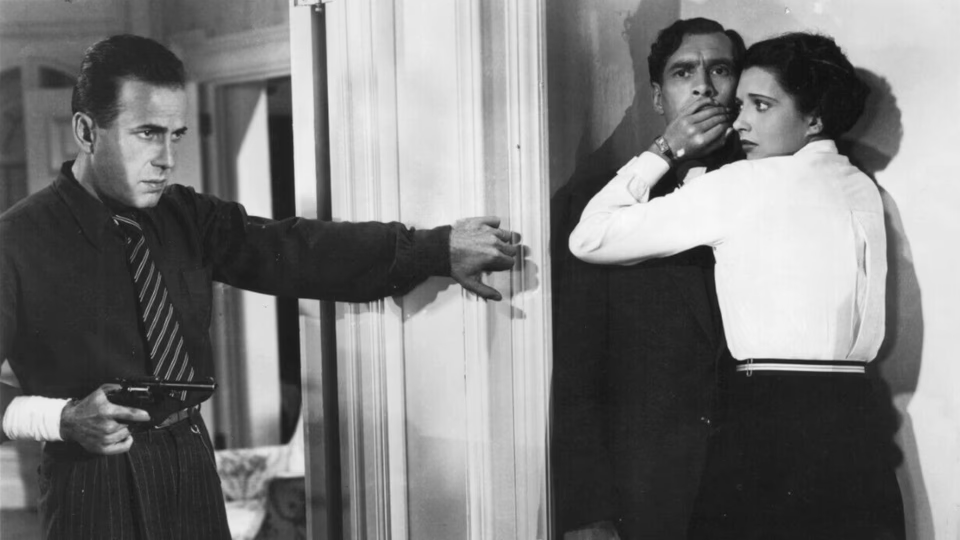
King of the Underworld is not a good movie. It knows this. Humphrey Bogart knows this. Kay Francis certainly knows this. And yet everybody shows up and does the work, which is more than you can say for some pictures that cost ten times as much.
Francis plays a doctor whose husband has been moonlighting as personal physician to Bogart’s gang. When hubby catches a bullet during a police raid, Francis loses both her spouse and very nearly her medical license. She relocates to the country to rebuild, but also—conveniently—to hunt down Bogart and clear her name. The plot requires coincidence the way a car requires gasoline.
Bogart plays the same thick-necked goon he was playing in every other Warner Bros. picture that year. He pronounces “world” as “woy-ald” and fancies himself a Napoleonic figure, lugging around a book called Famous Sayings and Doings of Napoleon. The title is helpfully printed on both sides, presumably so the audience can read it no matter which way Bogart holds it.
James Stephenson turns up as a wandering intellectual, a character type Hollywood loved in the thirties. Bogart kidnaps him to ghostwrite his autobiography. This Napoleon fixation is the film’s best joke, a petty crook who mistakes ambition for grandeur. Bogart plays it without a wink, which makes it funnier.
The climax is genuinely bizarre. Francis blinds the entire gang—I won’t spoil the method, because the fun is in watching it happen—then attempts to escape while a roomful of armed men stumble around like zombies in a horror picture. The opening credits feature a Nosferatu-like shadow, which suggests someone on the production not only knew exactly what kind of picture they were making, but was comfortable broadcasting it.
The film even offers a blurred-screen effect to simulate the gang’s impaired vision, which is novel. Less novel is the logic: when the cops arrive, Bogart orders his boys to “Let them have it!” to which a goon asks, “What’s the good of shootin’? We can’t see nothin’!” Yet the blinded goons somehow locate windows and begin shooting out of them.
The better story here is behind the camera. Francis was Warner Bros.’ highest-paid actress, but Bette Davis had overtaken her at the box office. Rather than negotiate a civilized exit, the studio tried to humiliate her into quitting by burying her in B-pictures. This was her sixth. She refused to blink. The performance she gives here is fully committed, dignified, and better than the material deserves. Bogart, drawing a fraction of her salary and nursing his own frustrations with the studio, reportedly got along well with her.1 Two prisoners making the best of the yard.
At 67 minutes, “King of the Underworld” has the decency to not overstay its welcome. It is preposterous, it is silly, and if you meet it on those terms it is a good time. Francis deserved better. So did Bogart. Warner Bros. did not deserve either of them.
Footnotes
-
Ann M. Sperber and Eric Lax, Bogart (HarperCollins, 2011), 113-114. ↩︎