Kill Bill: The Whole Bloody Affair

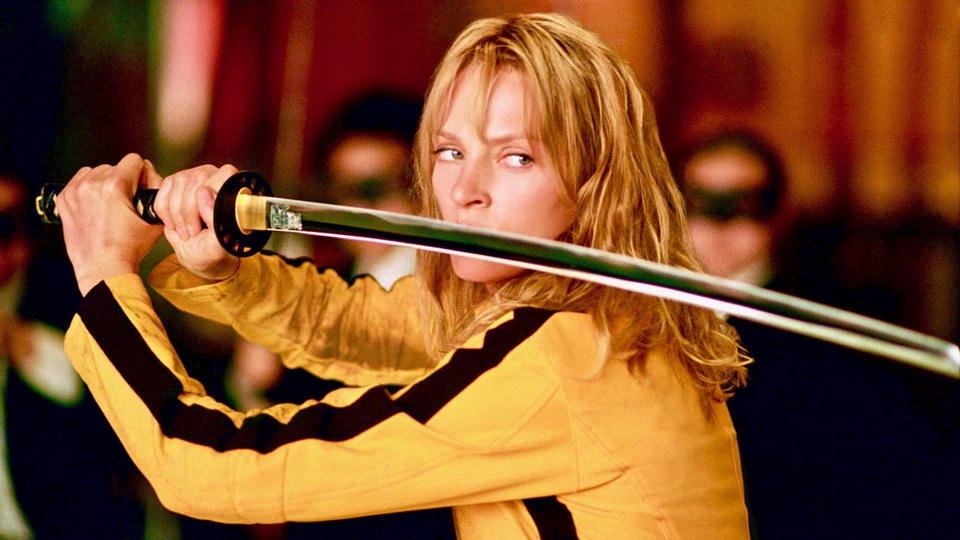
Quentin Tarantino’s director’s cut of his two-part revenge saga finally feels like the movie it was meant to be. No more artificial intermission. No more redundant exposition. Just four hours of pure, bloody vengeance.
Uma Thurman is The Bride, hunting down the assassins who massacred her wedding party. The film opens with her bleeding out on a chapel floor. We hear David Carradine’s unmistakable baritone claiming this is masochism, not sadism, before shooting her in the head. Cut to a pickup truck outside a suburban house. The revenge quest begins.
This is exploitation cinema as high art. Tarantino raids the vaults of Japanese samurai films, Hong Kong martial arts flicks, Italian westerns, and 1970s grindhouse sleaze. Genre buffs will spend half the runtime playing spot-the-reference. Sonny Chiba makes swords. A Tokyo sequence lifts shots from kaiju monster movies and borrows the blood-soaked energy of Takashi Miike. Shaw Brothers legend Gordon Liu appears as both a domino-mask wearing bodyguard and kung-fu legend Pai Mei. Throughout, Ennio Morricone’s spaghetti western themes duel with the iconic cue from Five Fingers of Death.
This director’s cut transforms what felt like two separate films into a single, relentless juggernaut. The theatrical split killed the momentum dead. You’d get invested in Uma Thurman’s rampage through Tokyo’s underworld, then wait months for part two, only to sit through recap exposition that ground everything to a halt. Here, Tarantino swaps that narrative dead zone for a simple 15-minute intermission. Grab a drink, use the restroom, come back. The fury never breaks.
The changes matter. The full-color Crazy 88 battle erupts in geysers of crimson. The anime backstory of Lucy Liu’s O-Ren Ishii plays uncut. Most crucially, Tarantino withholds a major reveal until the final Bill confrontation, letting the truth land like a gut punch instead of a foregone conclusion.
What surprised me this time around: Uma Thurman. Strip away the yellow tracksuit iconography and the fetishized violence, and you find an actress doing real work. Watch her face when she realizes her baby is gone. Watch the cold fury she channels in every sword swing. Tarantino shoots her like a goddess, yes, but she earns every frame. This might be the best leading performance in any Tarantino film, and the spectacle has been hiding it in plain sight.
The problem remains David Carradine. He handles Tarantino’s dialogue with flair—only Samuel L. Jackson does it better—and he’s believable as a killer. But as the charismatic mastermind who commands the Deadly Viper Assassination Squad? That’s a stretch. The role was written for Warren Beatty, who talked with Tarantino for a year before walking away, unable to connect with the grindhouse influences or commit to the physical training. Beatty suggested Carradine as a replacement, and Tarantino took the out.
But you can still feel Beatty’s ghost. The flute-playing is pure Carradine, but the romance with Thurman? The pimp-like authority over his stable of assassins? That’s Beatty’s role. Carradine’s good, but I can’t shake the feeling that Beatty—in some scenes—would have been even better.
Still, this is Tarantino working at the height of his genre-mashing powers. It’s excessive, referential, soaked in arterial spray, and absolutely committed to its exploitation roots. The Whole Bloody Affair is indeed the whole bloody affair, no longer chopped in half and left to bleed out between releases.
Not quite greatness. But damn close.