Jack Frost 2: Revenge of the Mutant Killer Snowman

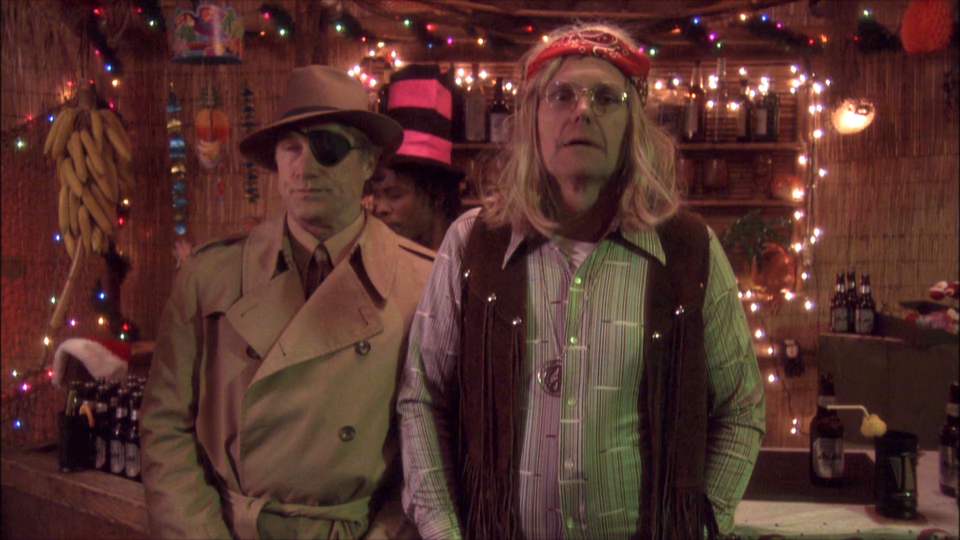
The original Jack Frost was a fun little splatter picture that knew exactly what it was: a movie about a killer snowman terrorizing a small town at Christmas. It had real snow, real locations, and a sense of fun that carried it past its budget. Jack Frost 2: Revenge of the Mutant Killer Snowman has none of these things.
The plot sees Sheriff Sam Tiler, still rattled from the prior film, decamp to a Bahamas resort for his deputy’s wedding. Jack, reanimated by a lab accident, psychically senses Sam and follows him to the tropics. This time he can spawn little killer snowballs—tribbles with teeth. It is not as fun as it sounds.
Writer-director Michael Cooney returns, but abandons everything that made the prior film work. He sets the action at a tropical resort he couldn’t afford to build, in weather he couldn’t control. Rain plagued the shoot, forcing the crew under a sixty-foot tent. Cooney responded by shooting everything in tight close-ups. You can feel him hiding the edges of the frame.
Compounding matters, twenty minutes pass before Jack even arrives on the island. We get a recap, travel arrangements, resort introductions, and a roll call of new characters we will not remember and do not need to. A killer snowman movie should not require this much patience.
Cooney shot on early high-definition digital video, which could not match film’s frame rate. Every scene has the slick, overlit quality of a daytime soap. To fix this, Sony provided a “digital process” that layered static grain over the image, making the high definition video look like lower definition video. The CGI fares worse. You could do better today on your lunch break with an app on your phone.
Which makes the practical effects all the more frustrating. They still work. The film’s one genuine highlight sees Jack dropping icicles on a victim from above, missing repeatedly, then transforming himself into a giant snow anvil and flattening the poor soul into pulp. It’s gruesome, inventive, and funny. The original was full of such gags. This sequel has exactly one.
By relocating to the tropics, Cooney also loses Christmas. There are decorations, but the movie never feels like a holiday film. You can hang tinsel on a palm tree, but it’s still a palm tree. Gone too are the kids, which is a strange omission given that one of the first film’s most uproarious scenes involved them. Horror-comedies need varied victims the way comedies need straight men. An adults-only resort populated by interchangeable twenty-somethings gives Jack nothing to play against.
This isn’t a case of bold reinvention. Cooney isn’t making his Aliens. He’s making the same movie, just worse in every dimension. He traded real locations for fake ones, film for video, practical charm for digital cheapness, and a setting that worked for one that doesn’t.
The lesson for aspiring low-budget filmmakers is simple: when you’re working with no money, don’t spend it pretending to be somewhere you’re not. Write around what you have. And if your first film worked, understand why before you make a second one.