Dead End

William Wyler didn’t want a set. He wanted to shoot in the real East Side tenements, but producer Samuel Goldwyn had Richard Day, who had just won an Oscar for Dodsworth, build a Manhattan street in West Hollywood. Wyler wasn’t impressed. “We built the whole damn street and it all looked phony,” he told biographer Axel Madsen thirty-five years later. “It was very fashionable in those days to build in the studio even when the real thing was standing somewhere. That was one battle I lost.”
All respect to Wyler, but that set is the star of the picture. It’s a full block of tenements running down to the river, where the boys swim in water you wouldn’t wash a dog in, and a new luxury apartment house looms over all of it because the rich have discovered the view. Below, the tenements swarm with people leaning out of windows and hanging wash. Riverboats slide past in the distance, courtesy of optical effects that still work. You never mistake it for the real New York, but you believe these people live there.
The story, adapted by Lillian Hellman from Sidney Kingsley’s play, covers a day and a night on the block. Sylvia Sidney is Drina, out on strike and raising her kid brother Tommy (Billy Halop) on nothing. Tommy’s gang roughs up a rich boy, and when the boy’s father steps in, Tommy stabs him in the hand and goes into hiding from the police. Joel McCrea plays Dave, who got out long enough to study architecture, graduated into a Depression with nothing being built, and came back to paint storefronts. Drina loves him, but he’s tangled up with a woman from the high-rise who likes him a lot and money a little more.
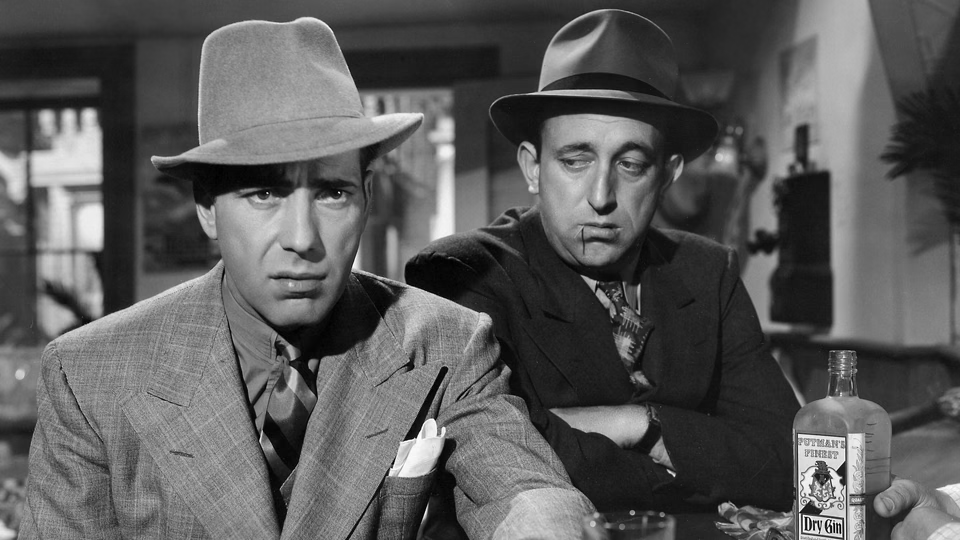
Also prowling the block, at great risk, is Humphrey Bogart as “Baby Face” Martin, a wanted killer who has had plastic surgery so no one will recognize him. Goldwyn wanted George Raft for Martin. Raft turned it down because the character was too unsympathetic, the same instinct that later steered him away from High Sierra and The Maltese Falcon. No agent ever did more for Bogart.
Martin is a heavy, but he has a mother and an old girlfriend he can’t stop thinking about, and Bogart lets you see the homesickness under the menace. Watch the early scene where a cop strolls over to chat. Martin charms him, and us, while some part of him is counting how long before the cop recognizes him.
Martin’s mother, played by Marjorie Main a decade before Ma Kettle, wants nothing to do with him and slaps him across the face. Next he finds Francey, his old girl, played by Claire Trevor. Francey has become something the Production Code wouldn’t let the film name. She’s sick, and she greets Martin with the flat patience of a woman who quit expecting him years ago. Trevor is on screen for about five minutes, but it was enough for a supporting actress nomination.
Trevor’s scene shows what’s missing from the leads. Sidney, a Bronx native, has the address but not the wear. A woman supporting a teenager with no paycheck coming in should look ten years older around the eyes. Trevor does. Likewise, McCrea, a California boy who would spend much of his career on horseback, is as convincing a product of the tenements as Henry Fonda would have been. Dave is written as a gentle idealist like the one Leslie Howard played in The Petrified Forest, so Bogart spends a second straight year facing the same kind of man, but McCrea lacks Howard’s knack for making that man interesting.
The boys came from the Broadway cast and went on to become the Dead End Kids, then the East Side Kids, then the Bowery Boys, and they got broader with every name change. This may be their best work, partly because the movie keeps leaving them behind to follow Bogart or McCrea, and partly because Wyler seems less amused by their mugging than later directors were. He treats them as part of the street. Ward Bond plays the high-rise doorman, gets a few lines, and looks ready to toss any of the kids into the river.
For about an hour this is a tough, observant social melodrama. Then Dave takes a knife in the arm and still gets the better of two professional killers, which is a lot to ask of an unemployed architect. After that, the movie starts making speeches about slums and reform school. The first hour has already made that argument just by letting us look at the street. The last shot is better: the boys wander off into the night singing an old prison song, and nobody explains it.
Bogart fans should seek it out. It’s one of his best performances from the years when he was still billed third.