Daughters of Darkness

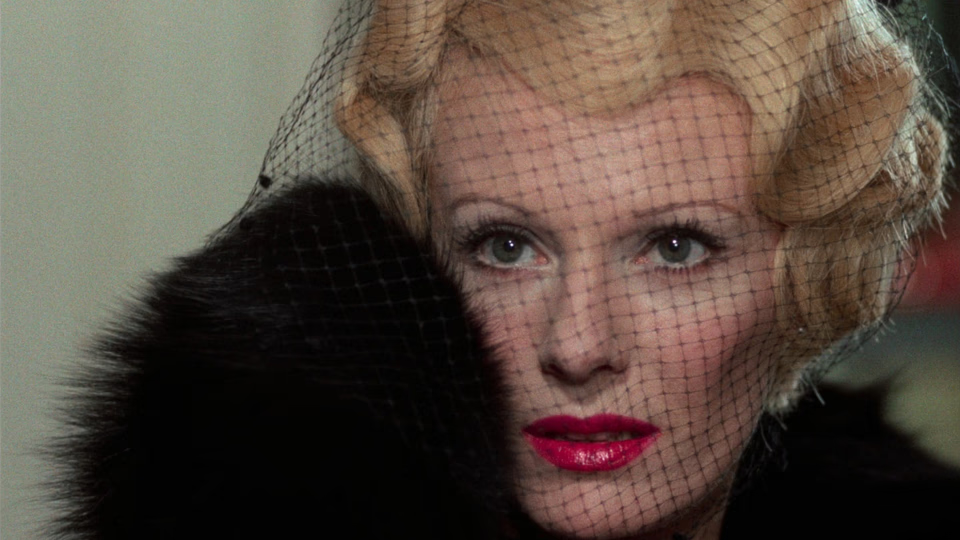
The Belgian coast in winter makes a fine setting for dread. Harry Kümel’s 1971 vampire film knows this. It also knows the power of Delphine Seyrig’s cheekbones, the menace of an empty hotel, and the queasy pleasure of watching beautiful people destroy each other.
What it doesn’t know is how seriously it wants to take itself.
The setup is pure European art-horror: newlyweds Stefan and Valerie are travelling to meet Stefan’s aristocratic mother. Valerie fears she won’t approve of their marriage. A train delay leaves them stranded at a grand seaside hotel where, due to the winter off-season, they’re the only guests. Stefan keeps putting off taking the channel ferry. Valerie frets. Soon, another pair of guests arrive, the ageless Countess Elizabeth Báthory and her secretary Ilona. Stefan is entranced by the Countess. She seems equally interested in the young couple. Valerie grows afraid. Stefan grows violent. Bodies pile up in nearby Bruges.
All this happens at a languid pace. Lots of slice-of-life moments interrupted by pregnant gazes and carefully composed shots of desolate beaches and cavernous foyers. Like any great hangout film, it holds your interest, not with action, but with atmosphere and personality.
Seyrig is magnificent as Elizabeth, channeling early Dietrich with a performance that’s both sophisticated and predatory. She commands every frame she’s in. John Karlen broods effectively as Stefan, all smolder and suppressed rage, though you keep wishing it were Oliver Reed. Andrea Rau, sporting a Louise Brooks bob, completes the Pandora’s Box homage with appropriate decadence.
Danielle Ouimet’s Valerie doesn’t fare as well. Her performance is convincing, capturing the character’s desperate need for validation. The trouble is the character herself. She’s so needy, so utterly lacking in agency, that she becomes nearly as insufferable to us as she is to Stefan. This might work if she weren’t our supposed window into this world of monsters.
It’s an easily overlooked flaw early, when the film is raising still-relevant questions about patriarchal control, female agency, and sexual violence. There’s a genuinely unsettling scene where Stefan and Valerie join gawking crowds viewing a murder victim in Bruges, the film turning our voyeurism back on us.
Then Stefan calls home and his “Mother” turns out to be something best described as Bela Lugosi in drag. The revelation goes nowhere, but it signals a tonal collapse as the film veers toward camp. Now Valerie’s ineptitude proves grating. She stops acting like a character and becomes a plot device.
As if that weren’t bad enough, the film stumbles into absurdity. In one scene, a character backs into a sink, grabs a straight razor, cuts their hand, and somehow—through a series of movements that defy physics and common sense—falls onto the upturned blade and dies. I laughed. I shouldn’t have, but I did. Later, two characters attempt to smother a third with a glass bowl (never mind the physics), which splits cleanly down the middle and flips back to slice the victim’s wrists. The vampires are finally undone because they apparently can’t tell time and get caught by sunrise.
These contrivances deflate whatever serious intentions the film harbored, making the whole effort feel hollow.
Still, the atmosphere lingers. Those empty hotel corridors, those hollow footsteps, that cold beach and roiling sea—they create a world worth visiting even when the plot fails to materialize. As a hangout film, something to put on in the background and drift in and out of while appreciating the images and wardrobes, it works.
But it should have been better. Daughters of Darkness comes so close to greatness that its failures sting more than they should. If only it had taken itself seriously. Seyrig alone is worth the price of admission. But those death scenes. Those ridiculous, inexplicable death scenes.