Count Dracula's Great Love

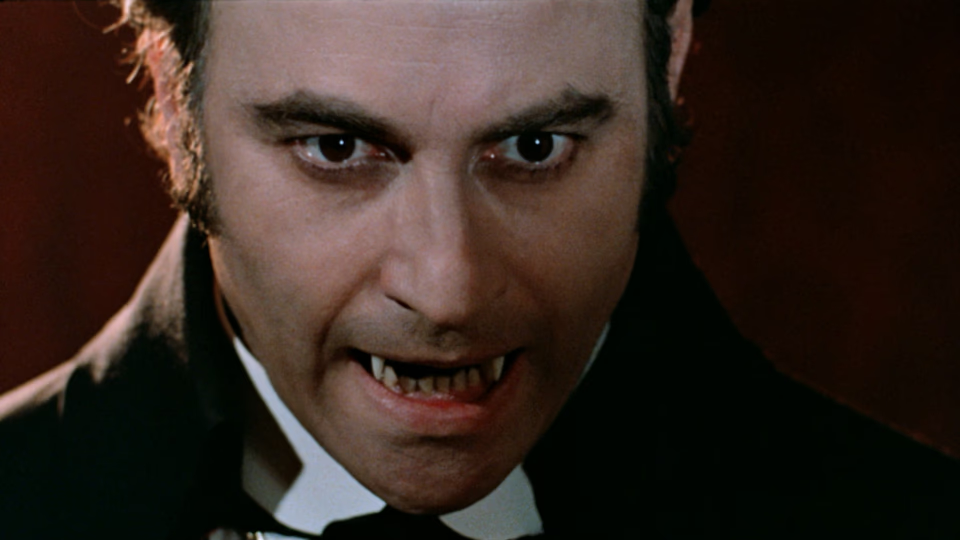
The trouble with Count Dracula’s Great Love is that it contains at least three Dracula movies, none of them finished. The script is credited to three writers, including star Paul Naschy and director Javier Aguirre, and you get the feeling nobody compared notes.
We open on a deliveryman getting attacked at a remote sanatorium in 19th-century eastern Europe. The attacker wears a cape. He is filmed from behind, but come now. Then the film spends its first act pretending we don’t know the sanatorium’s new owner, the pleasant Doctor Wendell Marlowe, is really Count Dracula.
Marlowe is searching for a virgin who will fall in love with him, fulfilling a prophecy that will restore his full power and resurrect his daughter, Radna. If that sounds ridiculous, wait. The “restoration” involves combed-back hair and face-paling makeup, transforming him into the Dracula we already saw in the prologue. And the daughter? They drop her coffin in a river. Prophecy fulfilled, I suppose.
Four women and one man are stranded at the sanatorium. The plot advances not through suspense or inevitability but through characters making spectacularly poor decisions. Movers ignore explicit warnings to prowl a haunted sanatorium looking for jewelry. A coachman stands within kicking distance of spooked horses. Guests take a shortcut through woods where they know their host sets game traps.
Yet I must be fair. Naschy makes an underwhelming Dracula but a convincing Marlowe—charming, devious, the kind of host who refills your wine while plotting your throat. The aging locations supply atmosphere the filmmakers didn’t earn. The violence is graphic and the nudity copious, delivering the titillating thrills the marquee promises. The disjointed story even generates a perverse suspense: you cannot guess what will happen next, because the movie itself doesn’t seem to know.
My deeper complaint is with the photography. The sanatorium is lit like a dentist’s office. A woman creeps down a hallway carrying a candelabra, and we wonder why she bothered—everything is bright enough to read by. In one scene, vampires follow peasants into a house. The camera pans up to a second-story window and lights pop on as though someone flipped a switch. Cut inside: candles. An early day-for-night sequence barely passes for overcast, which forces the actual daytime scenes into a blinding glare more suited to Malibu than Transylvania. The technical incompetence peaks with a shot meant to be nighttime that features blue skies and owls on the soundtrack.
Count Dracula’s Great Love is not a complete disaster. It is, however, a film that needed a single writer, a cinematographer better able to emulate natural lighting on a budget, and someone—anyone—to read the entire script end to end before they started shooting.